When we talk about work at height, we refer to different types of activities carried out in many sectors, which take place at a height of more than 2 metres above a stable surface (work at height). Numerous surveys conducted over the years, including the most recent ones, confirm that the leading cause of accidents in the construction sector is falls from height or into depth (confined spaces).
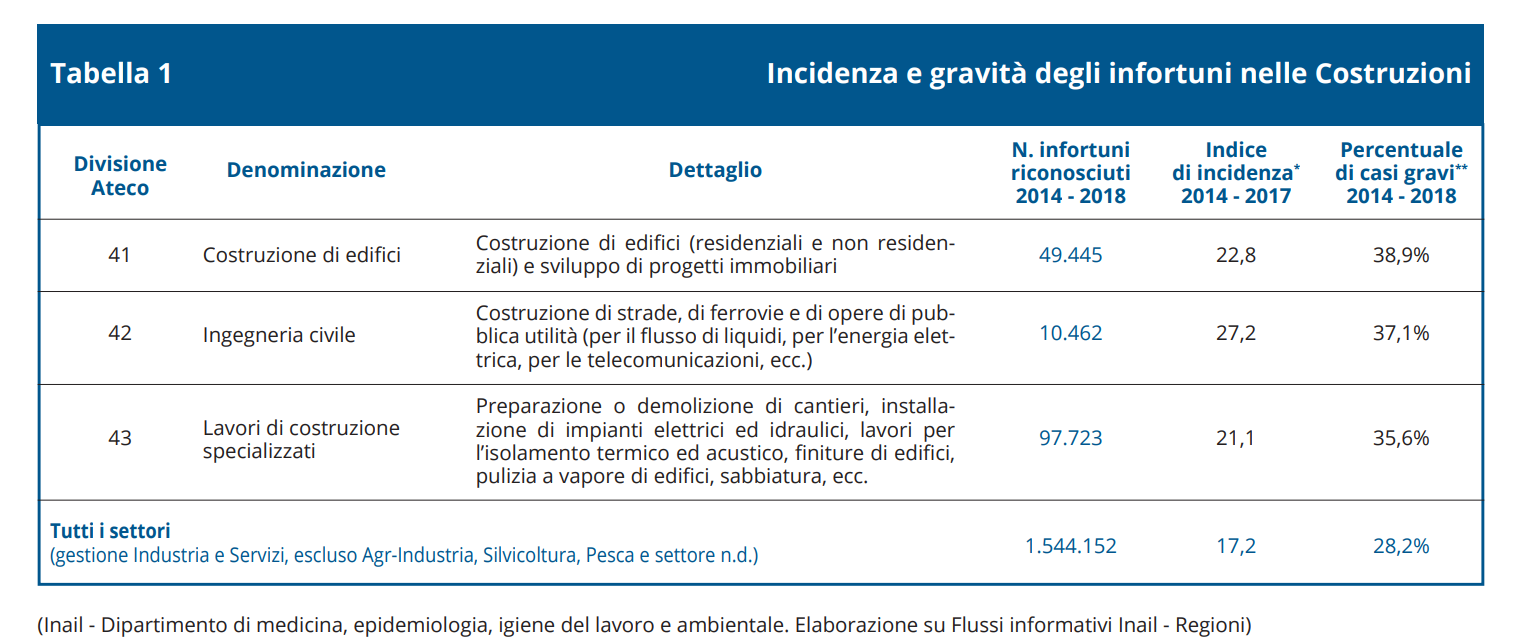
The construction sector shows higher figures compared to other sectors. Based on the latest analysis carried out by INAIL and detailed in data sheet 18, between 2014 and 2018 there were on average around 32,000 injured workers per year, accounting for approximately 10% of all cases.
As described in the report, the occupational accident risk in the sector varies depending on the activity performed.
The Construction sector (ATECO 2007) includes three divisions:
All three divisions show a risk level above the average.
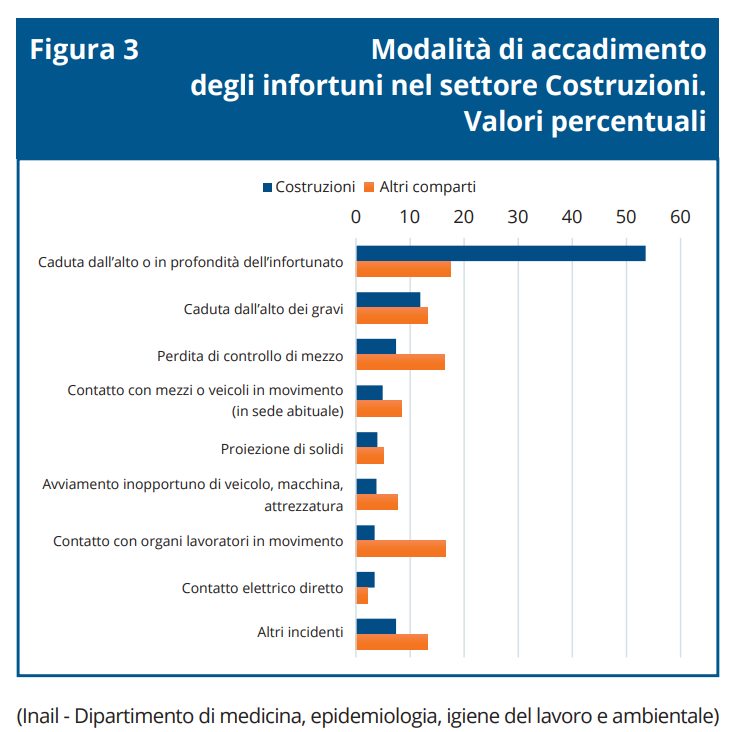
The most frequent types of accidents in the construction sector (Figure 3) are falls of workers from height, which alone account for more than half of accidents (54%), followed by falling objects or loads hitting workers (12%) and loss of control while operating vehicles or machinery (7%). Together, these three accident types represent almost three quarters of the analysed dataset. (Source: Surveillance system for fatal and serious occupational accidents)
Looking in more detail, falls from height mainly occur from equipment used for work at height, such as scaffolding and portable ladders, as well as from roofs or other elevated areas such as floors and balconies lacking adequate fall-protection systems.
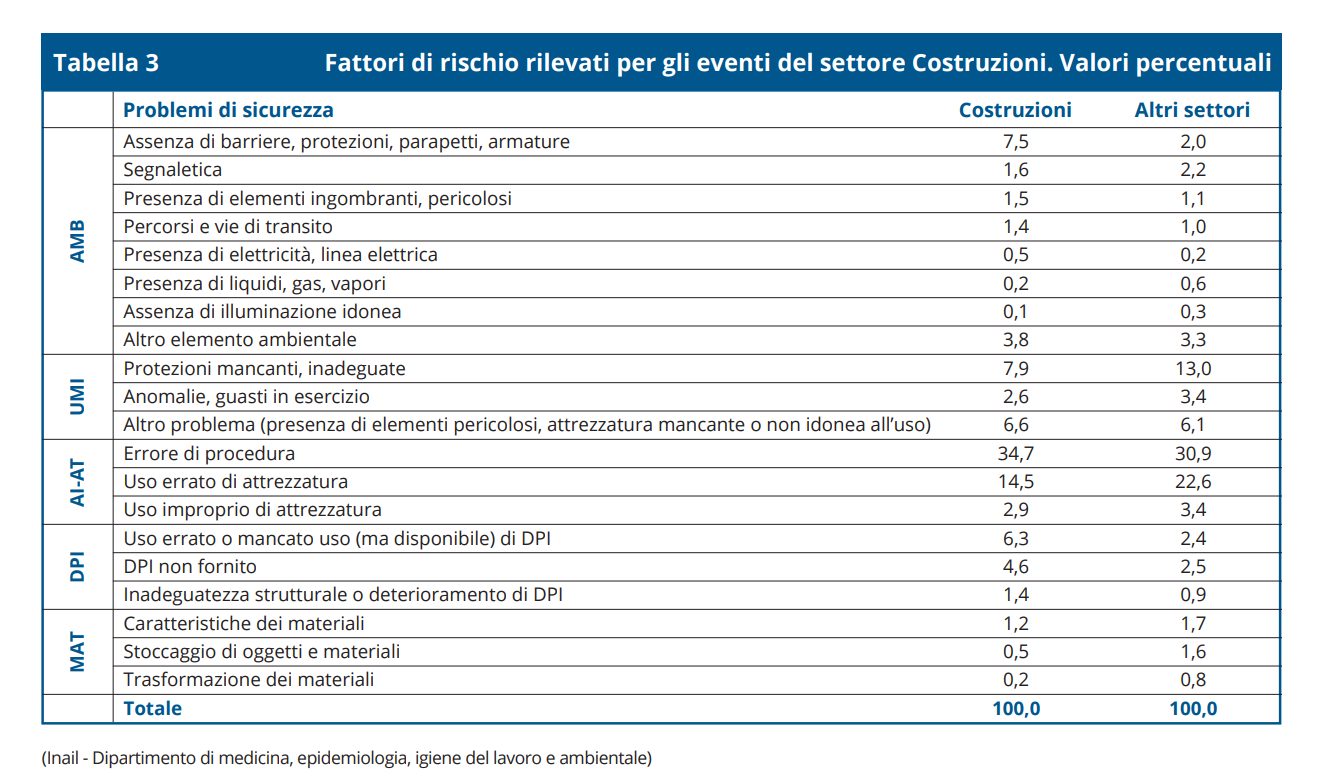
In falls from height, as reported by INAIL data, critical factors are mostly related to PPE and the procedures applied during work activities.
The Infor.Mo database made it possible to identify approximately 1,173 risk factors. Errors in workers’ operating methods occur “both due to occasional actions (54%) and due to organisational and management-related issues such as training, information and instruction (17%), as well as incorrect practices habitually tolerated within companies (26%)”. (Source: Infor.Mo – Surveillance system for fatal and serious occupational accidents)
Read the document from which this article is taken.
Infor.Mo., Surveillance system for fatal and serious occupational accidents, “Construction accidents: characteristics, causal factors, preventive measures”, data sheet no. 18, 2022 edition.