Spider Linee Vita is among the best partners for safety and offers market solutions in the field of confined spaces, ensuring the quality of equipment, training, and operator safety.
Worker health protection is achieved through proper training and instruction, and the use of PPE that protects them from both accidental falls and harmful agents. On this page, we focus on work in confined spaces and the mandatory PPE in these environments:
For all situations where an operator must perform work in tight or difficult-to-access spaces, where exposure to risk is high, Spider Linee Vita provides PPE that ensures operator safety. Let’s start by defining confined spaces and the risks associated with them.
Confined spaces: what are they?
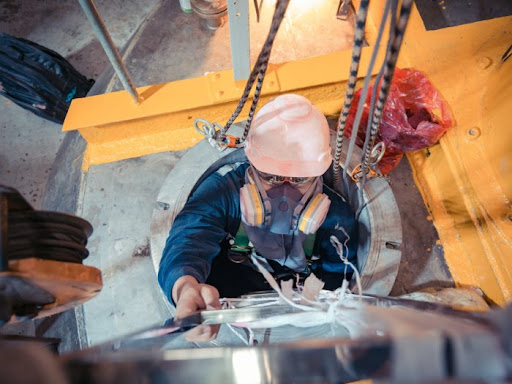
When we talk about confined spaces, we mean work environments where the risk of death or serious injury is very high due to the presence of hazardous substances or conditions.
A “confined space” refers to a fully or partially enclosed place/environment that was not designed or built to be permanently occupied by people, nor intended for such use, but which can be temporarily occupied to carry out work interventions such as inspection, maintenance, repair, cleaning, or installation of technological devices. These spaces are characterized by limited access openings and poor natural ventilation, where the risk of death or serious injury is very high due to the presence of hazardous substances, chemicals, or dangerous conditions (e.g., oxygen deficiency).
See Legislative Decree 81/08 and DPR 177/11.
Concrete examples: confined spaces can include tanks, silos, reactors, closed drainage systems, sewer networks, and generally areas where ventilation is absent or insufficient.
The main risks associated with work in confined spaces are primarily of three types:
Presence of harmful agents for the body;
High risk of falling from heights;
Risk of the operator becoming trapped.
Need advice on designing PPE for confined spaces?
Contact us
These spaces present very high risks due to the possible presence of toxic substances and gases, lack of oxygen, and fall hazards.
Spider Linee Vita, chosen by hundreds of companies over the years for the design, installation, and supply of lifelines, fall protection systems, also provides PPE for work in confined spaces.
Equipment for confined spaces: what is needed?
Spider Linee Vita offers equipment for confined spaces to ensure operator safety. Our solutions also allow for quick installation and ease of use, optimizing ergonomics.
We handle the design, installation, and maintenance of the fall protection system to ensure optimal functionality at all times. Its primary function is to prevent falls from height, which can be fatal in worst-case scenarios.
Remember that fall protection systems and PPE must be selected based on the work environment and the tasks to be performed.
PPE commonly used for confined spaces includes:
Tripod;
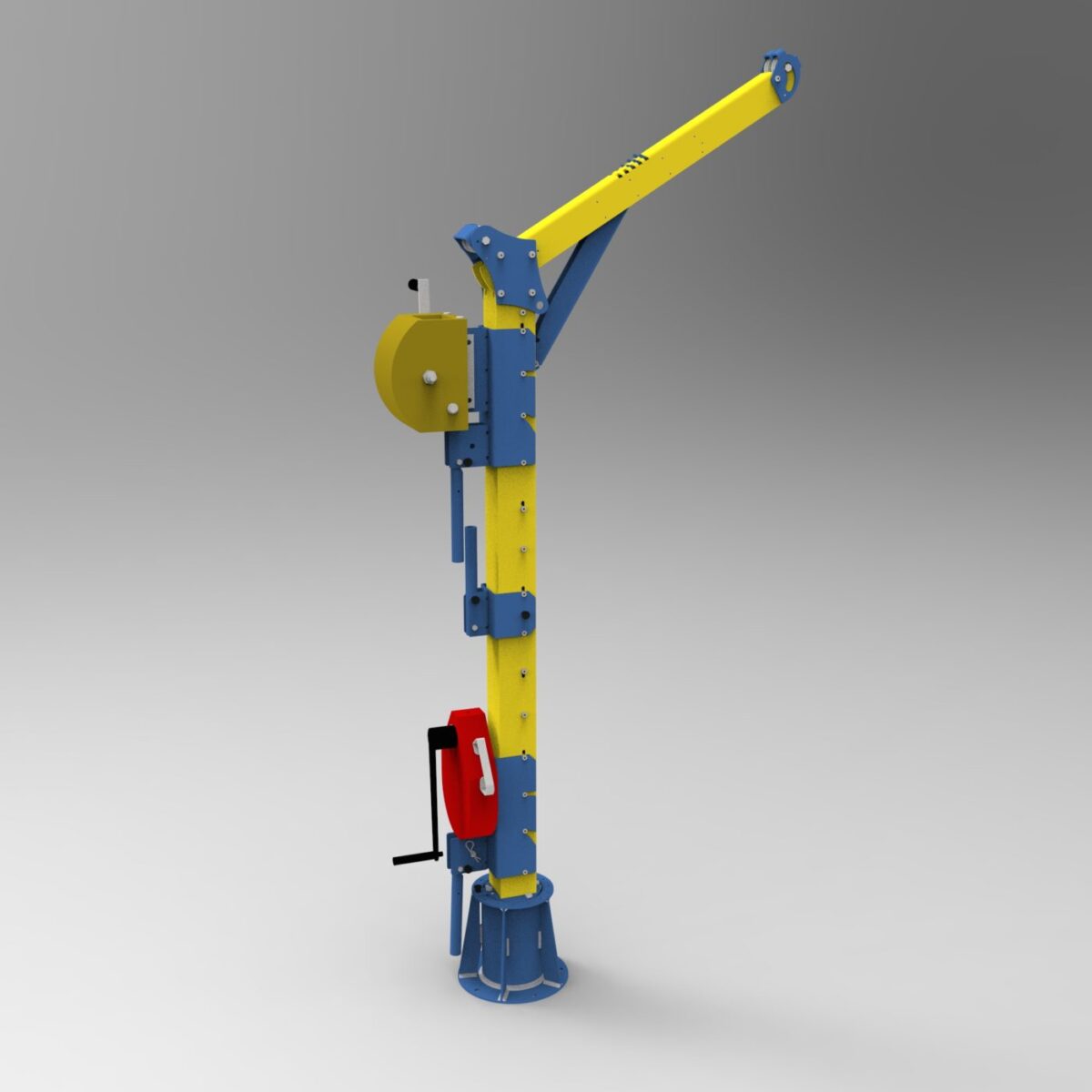
Mini-crane;
Winch;
Retractable with rescue device;
Many other systems available on request.
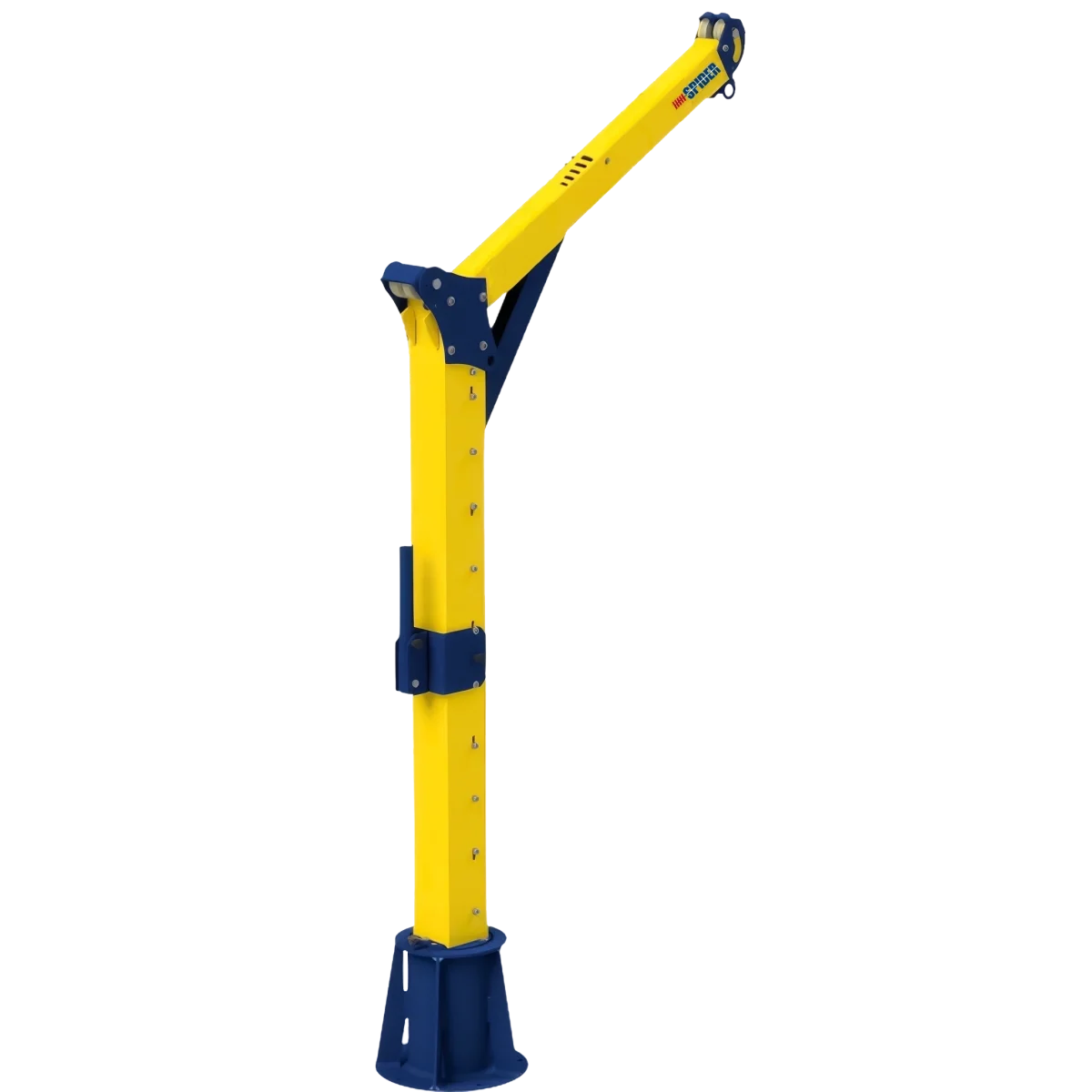
On the right, an example of a mini-crane, also used for confined spaces.
The design of a fall protection system is essential to determine the most suitable solutions for the environment where it will be installed. Spider guarantees the use of certified products and handles the provision of all project and executive documentation (declaration of proper installation, user and maintenance manual), duly signed. To find out which equipment is best for your needs, contact us!
To facilitate rescue operations in a confined space, in addition to an appropriate anchorage device, the correct connection and rescue systems must also be provided.
These PPE devices comply with two main standards: EN360:2003 for “Personal protective equipment against falls – Retractable fall arresters” and EN1496:2007 for “Personal protective equipment against falls – Rescue lifting devices.” Products on the market may comply with one, the other, or both standards. Which to choose? The deciding factor is the method of access to the confined space:
Access via stable surface: This applies to frontal access or ladder rungs. In this case, the operator reaches the work area independently, so a retractable device with emergency retrieval function (EN360+EN1496) is recommended. These devices provide full autonomy during work phases and immediate retrieval via the integrated lever. Note that the retrieval function is designed only for emergencies, not for continuous use. Therefore, it is not suitable for lowering the operator.
Suspended access: Here, the operator must be lowered into the confined space to reach the work area. The previous device is not suitable for raising or lowering the operator outside of emergencies. Therefore, the retractable device must be integrated with a winch that complies only with EN1496. The operator can be lowered using the winch and, once on a stable surface inside the confined space, disconnect while remaining attached to the retractable device. In case of emergency or illness, rescue is possible using the integrated retrieval function of the retractable. For normal ascent at the end of work, the operator reconnects to the winch for retrieval.
Need to design and install a fall protection system for confined spaces?
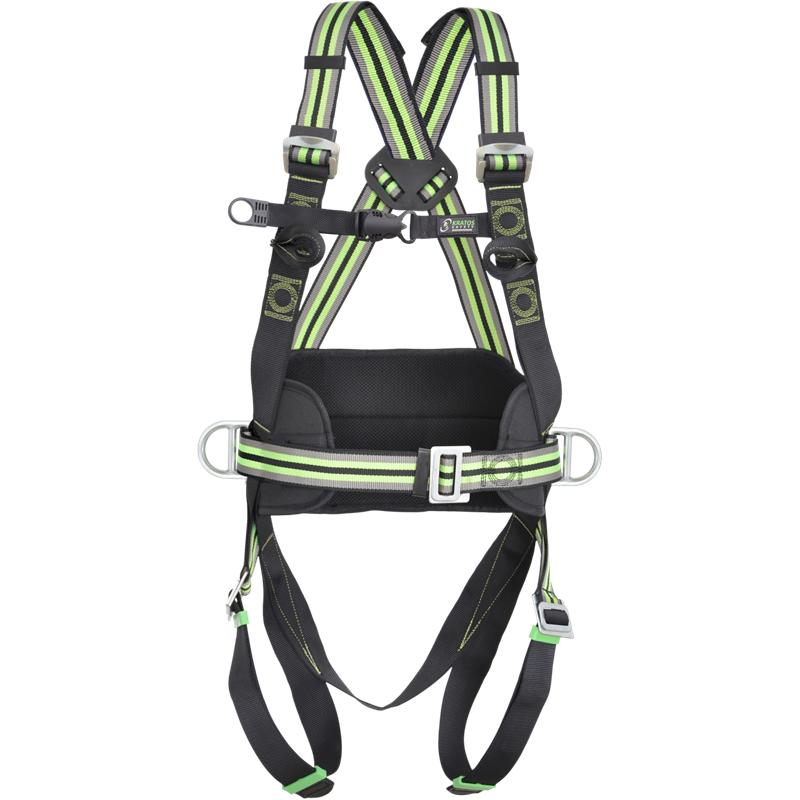
harnesses
safety lanyards
energy absorbers
retractable devices
These systems help prevent falls or enable an operator to be quickly rescued in the event of an emergency.
Intelligente Technologie für Sicherheit in der Höhe Spider® integriert digitale Technologien und IoT-Systeme, um Absturzsicherungsgeräte zu überwachen und vernetzte Systeme zu schaffen, die Ereignisse aufzeichnen und Prüfung sowie Wartung vereinfachen. IoT für die Höhensicherheit Spider® hat Technologien entwickelt, die es Absturzsicherungsgeräten ermöglichen:
den Systemstatus in Echtzeit zu überwachen
Sturz- oder Überlastereignisse zu registrieren
Benutzer oder Wartungspersonal automatisch bei Anomalien zu warnen
die Wartungsplanung mittels historischer Daten zu unterstützen
prädiktive Kontrollen durch spezielle Algorithmen zu ermöglichen Diese Entwicklung verwandelt klassische Absturzsicherungen in dynamische, intelligente und vernetzte Systeme. 📊 Digitales Monitoring und Prädiktive Wartung Die Integration von Sensoren und digitalen Plattformen ermöglicht:
eine Reduzierung unerkannter Fehlfunktionen
automatische Erfassung der Einsatzdauer des PSA
digitale Archivierung von Überprüfungen
automatische Benachrichtigungen bei fälliger Wartung oder Anomalien
sofortige Berichte für Sicherheitsverantwortliche und Wartungspersonal ⚙ Fortschrittliche Materialien und Technologien Die Innovation von Spider® zeigt sich auch in:
hochfesten und korrosionsbeständigen Stählen
Komponenten zur Minimierung struktureller Verformungen
FEM-optimierten Geometrien
effizienteren Energiedissipationssystemen 🌐 Auf dem Weg zu technologischer Nachhaltigkeit Neue Spider®-Systemgenerationen integrieren:
strukturschonende Designs
reduzierte Eingriffe auf Dächern
recycelbare Materialien
optimierte Produktlebenszyklen 🔐 Integration in betriebliche Sicherheitslösungen Spider®-Technologien können sich verbinden mit:
Unternehmens-Sicherheitsplattformen
Systemen für geplante Wartung
mobilen Apps zur PSA-Prüfung
Dashboards für Sicherheitsmanager
Erkannte deutsche Quelle und bereitete englische Übersetzung vor
Erkannte deutsche Quelle und bereitete englische Übersetzung vor
Smart Technology for Working-at-Height Safety
Spider® integrates digital technologies and IoT systems to monitor fall-arrest devices and create connected systems that record events and simplify inspection and maintenance.
IoT for Height Safety
Spider® has developed technologies that enable fall-arrest devices to:
monitor system status in real time
record fall or overload events
automatically alert users or maintenance staff in the event of anomalies
support maintenance planning through historical data
enable predictive checks using dedicated algorithms
This development transforms conventional fall-arrest systems into dynamic, intelligent and connected systems.
📊 Digital Monitoring and Predictive Maintenance
The integration of sensors and digital platforms enables:
a reduction in undetected malfunctions
automatic recording of PPE usage time
digital archiving of inspections
automatic notifications when maintenance is due or anomalies are detected
instant reports for safety officers and maintenance staff
⚙ Advanced Materials and Technologies
Spider®’s innovation is also reflected in:
high-strength, corrosion-resistant steels
components designed to minimise structural deformation
FEM-optimised geometries
more efficient energy-dissipation systems
🌐 Towards Technological Sustainability
New generations of Spider® systems incorporate:
structure-friendly designs
reduced intervention on roofs
recyclable materials
optimised product life cycles
🔐 Integration into Operational Safety Solutions
Spider® technologies can connect with:
corporate safety platforms
scheduled maintenance systems
mobile apps for PPE inspection
dashboards for safety managers
Scelta dei Materiali e Installazione Le linee di ancoraggio flessibili orizzontali (TIPO C), solitamente composte da una fune tesa tra due o più ancoraggi strutturali, sono la soluzione più comune per i tetti in coppi o tegole. Questa tipologia permette all’operatore di muoversi con continuità lungo un percorso esteso. Possono essere rigide o deformabili, a seconda della necessità di limitare la forza di caduta sulla struttura. Una valida alternativa però è anche la scelta di ancoraggi singoli (TIPO A), in quanto soprattutto per l’ambito residenziale sottoposto a vincoli paesaggistici o urbanistici particolari va a evitare problematiche estetiche mediante l’uso di ancoraggi sottotegola, che appaiono nascosti appunto tra i coppi o le tegole. L’installazione dei dispositivi di sicurezza dovrebbe idealmente avvenire durante la fase di costruzione della copertura, così da integrarli correttamente con il manto impermeabile e garantirne la tenuta all’acqua. Se consentito è sempre consigliabile optare per pali indeformabili, che in caso di utilizzo improprio non richiedano la sostituzione dell’intera struttura, ma solo delle componenti danneggiate del sistema di ancoraggio.
Choice of Materials and Installation
Horizontal flexible anchor lines (TYPE C), usually consisting of a cable tensioned between two or more structural anchor points, are the most common solution for roofs with clay or terracotta tiles. This type of system allows the operator to move continuously along an extended path. They can be either rigid or deformable, depending on the need to limit the force of a fall on the structure.
However, a valid alternative is also the choice of single anchor points (TYPE A), as this avoids aesthetic issues, particularly in residential settings subject to specific landscape or planning restrictions, through the use of under-tile anchors, which remain hidden among the roof tiles.
The installation of safety devices should ideally take place during the construction phase of the roof, so that they can be correctly integrated with the waterproofing layer and their watertightness guaranteed.
Where permitted, it is always advisable to opt for non-deformable posts, which, in the event of improper use, do not require replacement of the entire structure, but only of the damaged components of the anchor system.
Protezione anticaduta
imbracature
cordini di sicurezza
assorbitori di energia
dispositivi retrattili Questi sistemi permettono di prevenire cadute o recuperare rapidamente un operatore in caso di emergenza.
Fall Protection
harnesses
safety lanyards
energy absorbers
retractable devices
These systems help prevent falls or enable an operator to be quickly rescued in the event of an emergency.
Protezione delle vie respiratorie In presenza di gas o carenza di ossigeno possono essere necessari:
autorespiratori isolanti
maschere con filtri specifici
sistemi di ventilazione forzata Questi dispositivi devono essere scelti sulla base di una valutazione preventiva dell’atmosfera di lavoro. Protezione della testa e del corpo Altri DPI comunemente utilizzati sono:
caschi di sicurezza
guanti protettivi
calzature antinfortunistiche
tute protettive La combinazione dei DPI dipende sempre dal tipo di ambiente e dalla lavorazione da svolgere.
Respiratory Protection
In the presence of gas or oxygen deficiency, the following may be required:
self-contained breathing apparatus
masks with specific filters
forced ventilation systems
These devices must be selected on the basis of a preliminary assessment of the working atmosphere.
Head and Body Protection
Other commonly used PPE includes:
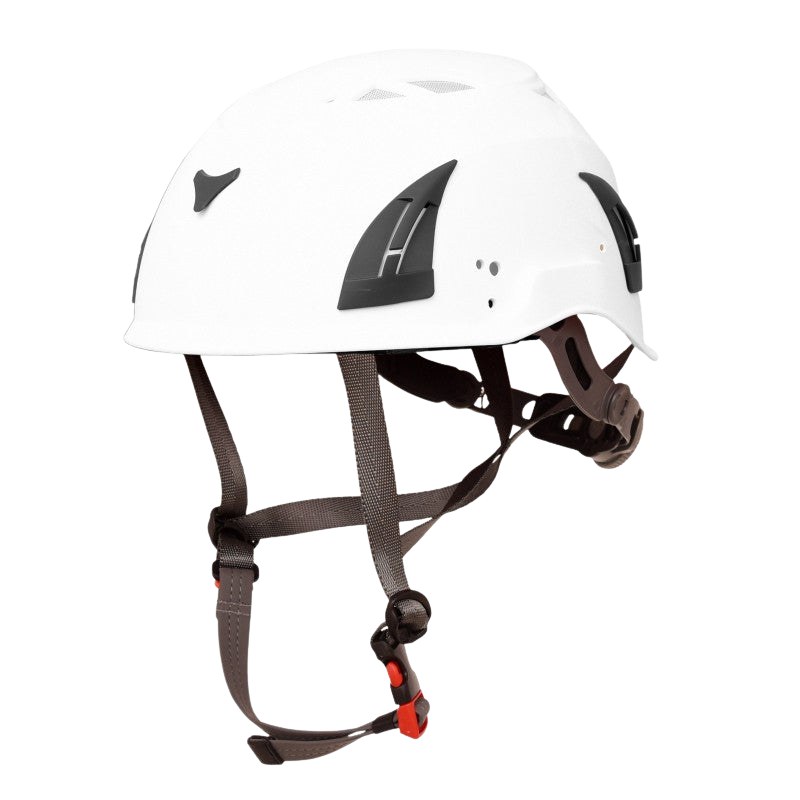
safety helmets
protective gloves
safety footwear
protective coveralls
The combination of PPE used always depends on the type of environment and the work to be carried out.
Confined Space Equipment: Access and Rescue Systems
Are “non-wearable” devices or equipment also required as part of safe access? Yes — in addition to wearable PPE, confined space work almost always requires access and rescue equipment for the operator. This equipment does not strictly qualify as PPE, but forms part of the overall safety system.
The most commonly used include:
Tripods for Confined Spaces
Anchor structures installed above the access point that allow the operator to be:
lowered into the space
quickly rescued in the event of an emergency
Davit Arms and Anchor Arms
Used when the space does not allow for the installation of a tripod. They enable vertical access and rescue of the operator.
Recovery Winches
Devices used to:
lower the operator into the confined space
recover them in the event of illness or emergency
These systems generally comply with standard EN 1496.
Retractable Devices with Rescue Function
Compliant with the following standards:
EN 360 – retractable devices
EN 1496 – rescue devices
They allow a fall to be arrested and the operator to be recovered.
Gas Detectors
Essential instruments for monitoring:
oxygen levels
the presence of toxic gases
the presence of flammable gases
These form an integral part of safe access procedures.
Inspection and Maintenance of Fall-Arrest PPE
Regulations require periodic checks of PPE.
Under EN 365 and EU Regulation 2016/425:
A visual check must be carried out before each use
A periodic inspection is mandatory at least once a year, carried out by competent personnel
For permanent anchor systems, the following standards also apply:
UNI EN 795
UNI 11578
UNI 11560
These require periodic checks and technical documentation.
Mandatory Documentation for PPE and Fall-Arrest Systems
The management of PPE requires specific documentation.
For fall-arrest PPE:
PPE logbook
company PPE register
periodic verification records
For permanent systems:
technical file
declaration of correct installation
use and maintenance manuals
inspection register
Failure to properly manage PPE can result in civil and criminal liability, in particular under Articles 589 and 590 of the Italian Criminal Code in the event of an accident.
Spider Linee Vita: Design of Fall-Arrest Systems for Confined Spaces
Spider Linee Vita operates in the field of workplace safety with a turnkey approach, which includes:
risk assessment
technical design
installation of fall-arrest systems
maintenance and inspection of systems
We specialise in the design and installation of fall-arrest systems, also used for access to confined spaces.
Our solutions include:
anchor systems
rescue devices
access structures such as davit arms and anchor supports
Operational Presence in Lombardy
Spider Linee Vita operates throughout Italy, with operational offices in the Lombardy region. This presence allows us to support industrial companies in the region with:
risk assessment
design of fall-arrest systems
installation and maintenance of systems
Our Strengths
fully controlled supply chain with no subcontracting
certified in-house installers
over 100 solutions developed, many with international patents
production entirely Made in Italy
complete service, from design to maintenance
Do You Need to Make a Confined Space Safe?
Spider Linee Vita supports companies and safety managers in the design of fall-arrest systems and safe access solutions for complex industrial environments. Request technical consultancy to assess the most suitable solutions for your system.