Work at height exposes operators to a high risk of falling from height. For this reason, the design and installation of anchorage devices must be carried out in compliance with the relevant technical standards, selecting solutions appropriate to the operational context and frequency of use.
Within the European and Italian regulatory framework, anchorage devices are mainly governed by three standards:
Correctly understanding the scope of application and the differences between these standards is essential to ensure safety, compliance, and durability of the fall protection system.
Anchorage devices are components or systems designed to allow the connection of personal fall protection equipment (harnesses, lanyards, self-retracting devices) to a supporting structure, in order to prevent or arrest a fall.
An anchorage device includes:
Anchorage devices must be compatible with personal fall protection systems compliant with UNI EN 363.
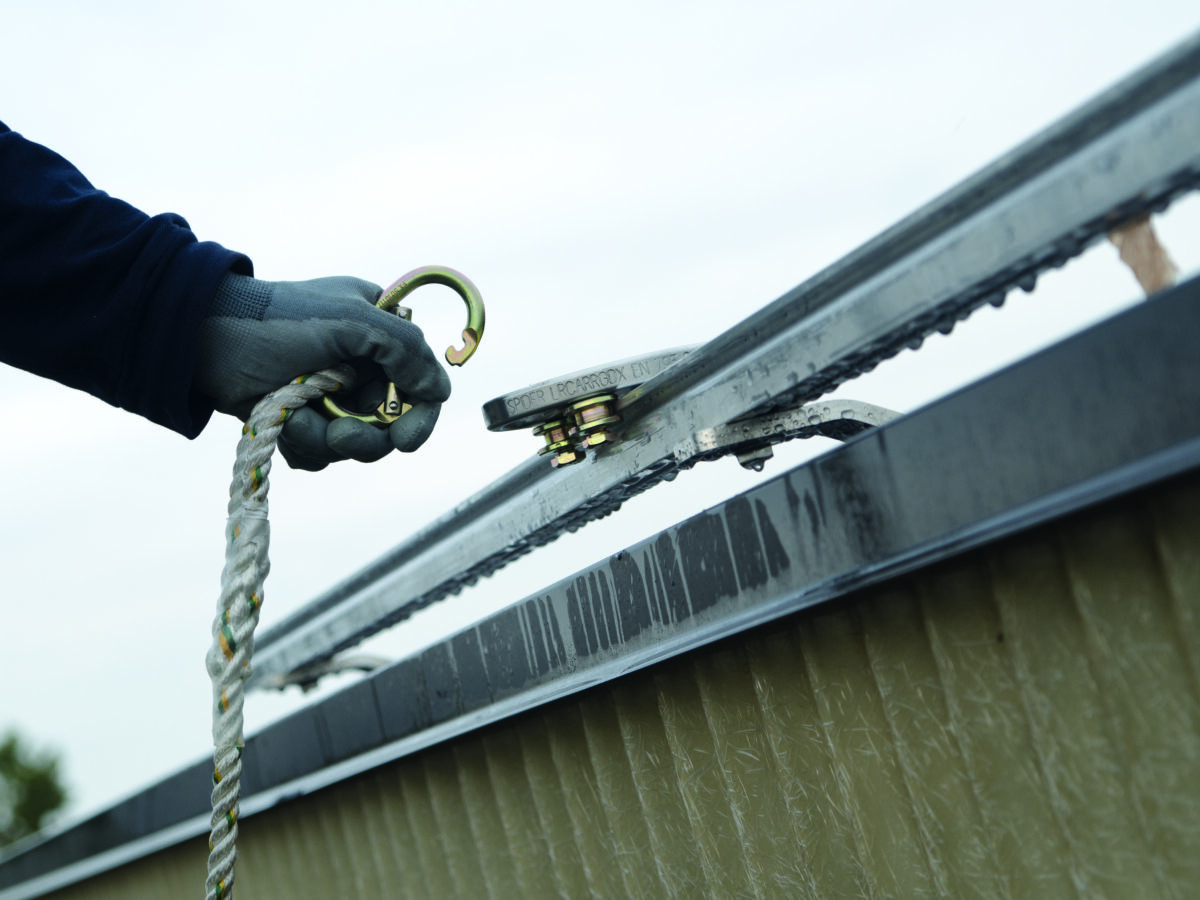
UNI EN 795:2012 specifies the performance requirements and test methods for single-user anchorage devices, explicitly stating within its scope that such devices are:
intended to be removed from the structure
These are therefore temporary or portable anchorage devices, mainly used on construction sites or for non-recurring interventions.
The standard also defines:
The following fall under UNI EN 795:2012:
CEN/TS 16415:2013 is a European Technical Specification that supplements EN 795 by introducing additional criteria for anchorage devices intended for simultaneous use by two or more operators.
This specification:
UNI 11578:2015 regulates anchorage devices intended for permanent installation on buildings and structures.
It applies to systems designed to:
The standard defines specific criteria for:
(UNI 11578 – UNI EN 795 for performance aspects)
These are fixed single anchor points, permanently installed on the structure.
They are used as:
When permanently installed, they fully fall under UNI 11578.
(UNI EN 795)
These are mobile or removable anchorage devices, intended for temporary use.
Main characteristics:
(UNI 11578 – UNI EN 795 – CEN/TS 16415)
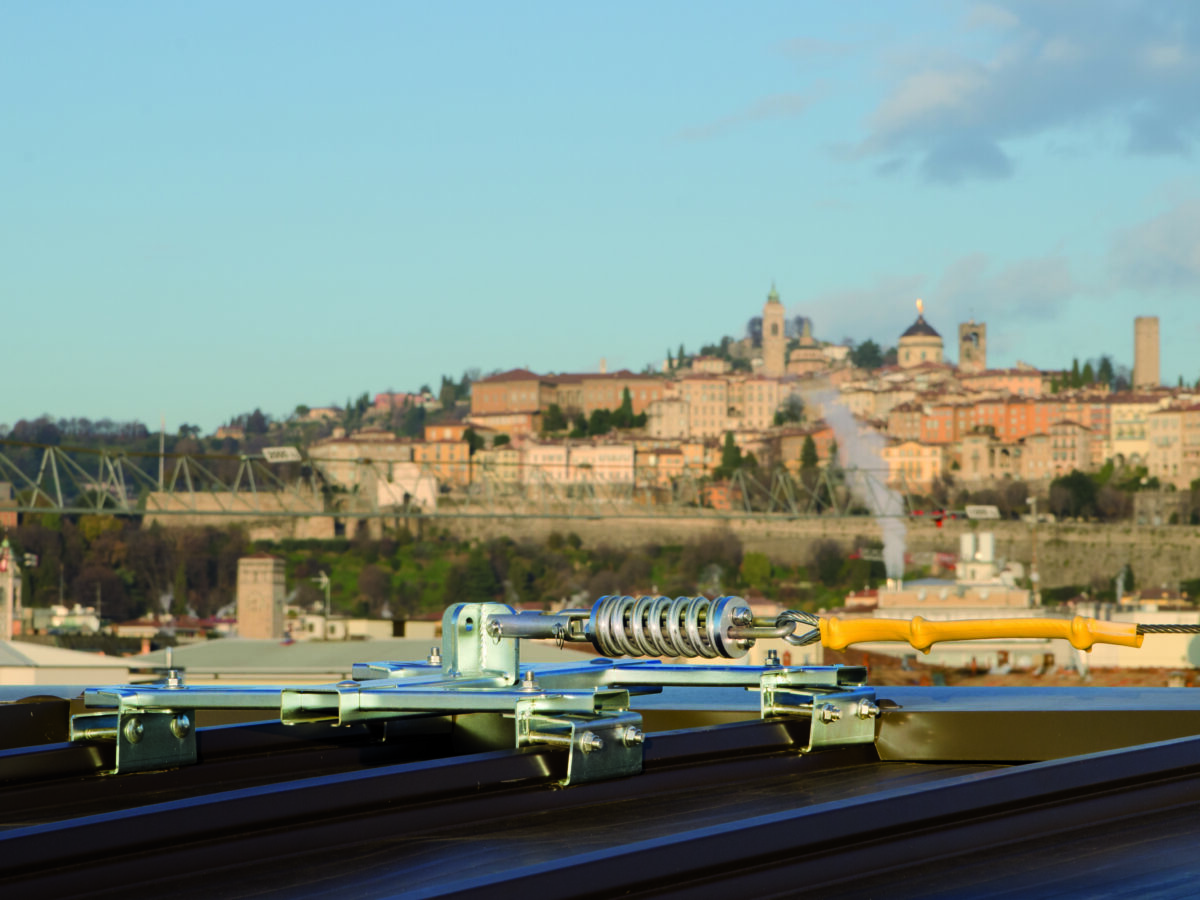
Flexible lifeline systems are permanent systems consisting of steel cables anchored to multiple structural points.
They allow the operator to move continuously and safely.
(UNI 11578 – UNI EN 795 – CEN/TS 16415)
These are rigid systems, generally rail-based, offering:
They are widely used in industrial environments and for the maintenance of complex installations.
(UNI EN 795)
These are anchorage devices not structurally fixed, stabilized by ballast weights.
They are mainly used on:
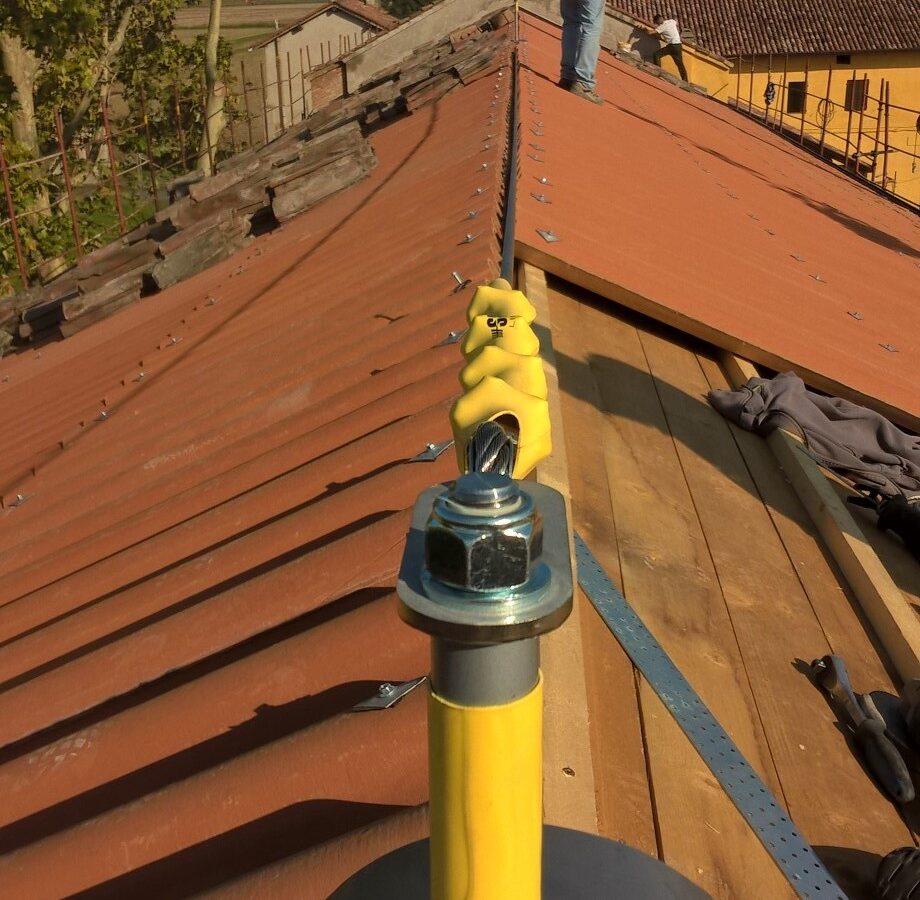
Alongside anchorage devices designed to connect personal fall protection equipment, two further standards regulate fixed installations used for safe access to roofs and pitched surfaces.
UNI EN 516 covers permanent access installations — walkways, working platforms and fixed footstep ladders — installed on roofs. It defines two classes:
UNI EN 517 applies to safety hooks for pitched roofs, permanently fixed and fitted with a closed ring so they can double as PPE anchorage points where required. Two types are defined:
Unlike the anchorage devices described above, UNI EN 516 and UNI EN 517 installations are not, by themselves, PPE anchorage points: they qualify as such only when explicitly classified for that use (UNI EN 516, Class 2) or fitted with the required ring (UNI EN 517).
Scaffolding anchors are a distinct category, regulated by the schemes and drawings included in the ministerial authorisation for the construction and use of fixed scaffolding (Ministry of Labour circulars no. 85/78, 44/90 and 132/91). They secure the scaffold structure to the building, not the operator, and therefore fall outside the scope of the anchorage devices described above.
Three types are identified:
A separate set of guidelines, ETAG 001, applies to the individual metal anchors used to fix a device to a concrete base — not to the anchorage device as a whole. These anchors are classified in two ways:
By type:
By working principle:
Choosing the correct anchor type for the base material and expected load is a precondition for the anchorage device itself to perform as certified: a compliant device installed with the wrong anchor does not guarantee the declared holding capacity.
Products that do not fall under any of the standards above — UNI EN 795, CEN/TS 16415, UNI 11578, UNI EN 516/517, the scaffolding circulars or ETAG 001 — remain subject to the general product-safety obligations of Legislative Decree no. 206 of 6 September 2005 (source: INAIL). This residual category covers anchor solutions that fall outside the scope of a dedicated technical standard, and it should not be read as a lower-safety alternative to the classified types above.
CONTACT US