Managing safety in high-risk sectors like utilities, construction, and manufacturing is a high-stakes responsibility.
On this page, we explore the technicalities of the vertical lifeline, from meeting stringent requirements to selecting the right assembly for your specific infrastructure.
Table of Contents:
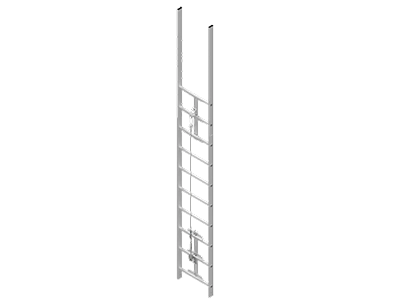
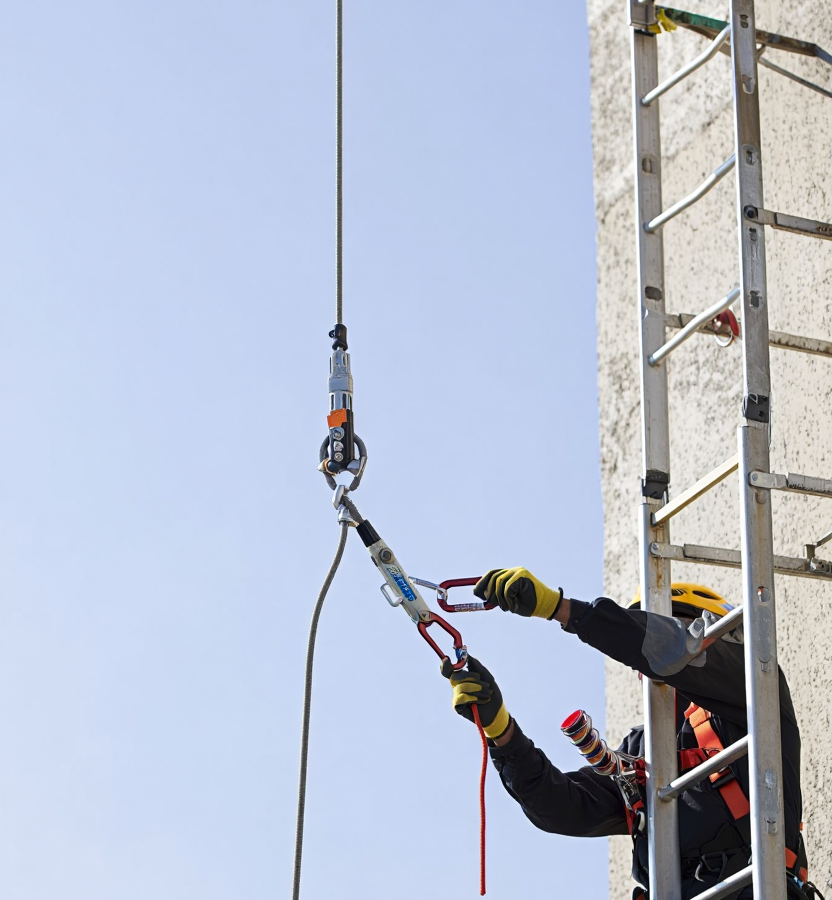
The Vertius Lifeline by Spider is a vertical fall protection device designed to provide maximum safety during access and work at height on fixed ladders, both vertical and slightly inclined. The system uses a rigid anchorage line with a steel rope and guided device, ensuring continuous protection for the operator along the entire ascent and descent.
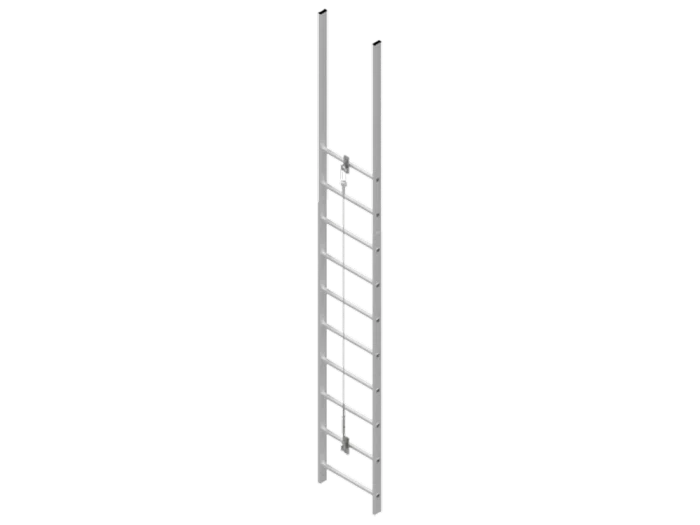
Permanent vertical anchorage system designed for safe access and ascent on fixed vertical or inclined ladders. The lifeline consists of an Ø 8 mm stainless steel wire rope with dedicated top, bottom and intermediate components, and is intended for use in combination with a compatible guided fall arrester.The system complies with the requirements of EN 353, allows use by one operator at a time, and provides high mechanical strength (>15 kN), long-term reliability, and durability in outdoor environments.
Choosing the right vertical lifeline system depends heavily on your environment and frequency of use:
Usually made of 8mm or 10mm stainless steel. These are incredibly versatile and can be installed on most existing ladders. They are the standard choice for utilities and telecommunication towers.
A rigid track that the fall arrest device glides through. These are often preferred in confined spaces or where the clearance distance is minimal, as they have zero “stretch” or deflection during a fall.
A hybrid solution where the fall arrest rail is built directly into the rungs of a new ladder, providing the most ergonomic and aesthetic finish for modern facilities.
Discover all our lifeline system solutions.
Unsure which system is right for your infrastructure? Book a technical site survey with our engineering team to ensure total safety and compliance.
CONTACT USOur systems are deployed across the most demanding sectors:
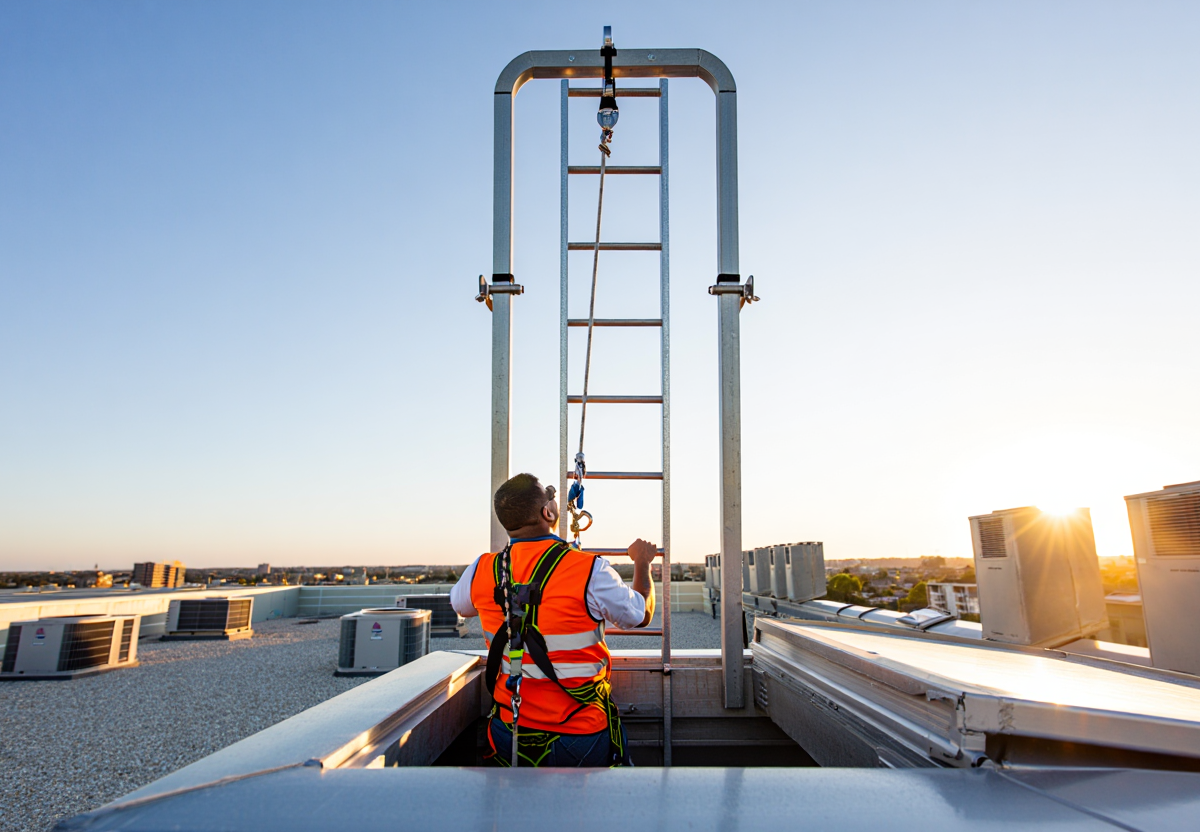
The Work at Height Regulations 2005 are clear: employers must do everything “reasonably practicable” to prevent falls. When it comes to a vertical fall arrest system, compliance is generally dictated by:
Failing to meet these vertical lifeline requirements doesn’t just risk a fine; it risks your company’s reputation and, more importantly, the lives of your team. Our role is to handle the complexity of these standards so you don’t have to.
We believe that safety shouldn’t be fragmented. Our process is designed to be seamless:
The integrity of a vertical life line is only as good as its anchor points. We categorize these based on the structure:
A vertical fall arrest system is not a “fit and forget” solution. These systems must be inspected and recertified at least every 12 months (and often every 6 months for high-usage sites).
Our maintenance packages include visual inspections, tension testing, and checking for corrosion or deployment of shock absorbers. Regular maintenance ensures your asset remains a life-saving tool rather than a liability.
Is your safety system due for its annual inspection? Schedule your mandatory recertification now to avoid non-compliance risks and sanctions.
CONTACT USWe understand the pressure of being responsible for others’ safety. We solve your biggest pain points by offering:
Stop managing fragmented safety solutions. Request a comprehensive quote today and partner with a single, certified expert for all your vertical safety needs.
CONTACT USFall restraint prevents you from reaching the edge. Fall arrest, like our vertical systems, safely stops you after a fall has occurred, preventing impact with the ground.
Most modern cable-based systems are designed for up to 2 or 3 users simultaneously, provided the anchor points have been engineered for that specific load.
Yes. While the systems are intuitive, the Work at Height Regulations require that all users are “competent.” We provide on-site training as part of our installation package.
In most cases, yes. However, we must first perform a structural pull-test to ensure the existing ladder can withstand the forces generated during a fall.