How can operator safety be ensured during routine and extraordinary maintenance operations on tile and terracotta roofs? In Italy, Legislative Decree No. 81 of 2008, known as the “Consolidated Law on Workplace Safety,” aims to establish uniform protection standards for workers throughout the national territory. This applies to all sectors, including maintenance operations and transit on tile and terracotta roofs. Tile and terracotta roofs represent a serious fall hazard for operators who need to intervene or even just pass through. Therefore, adequate fall prevention and protection measures must be implemented in compliance with current regulations. SPIDER can provide tailored design, turnkey supply, installation, and maintenance of fall protection systems such as lifelines or fall arrest systems. If you have all the necessary information and documents click here
In the context of work at height, reliability and safety are essential. For this reason, relying on industry specialists can be a huge advantage for your company.
When it comes to work at height, the technical complexity and associated risks are high. Regulatory requirements, risk management, staff training, and equipment maintenance are all aspects that require specific and up-to-date expertise.
By relying on specialists, you not only ensure compliance with current regulations, but also benefit from the experience and technical skills these professionals bring. They can identify and mitigate risks, properly train your staff, and ensure equipment is always state-of-the-art and maintained in optimal condition.
From a business perspective, investing in height safety is not just a regulatory obligation, but a strategic choice. A safe working environment can improve productivity, reduce costs associated with accidents and occupational illnesses, and strengthen your company’s reputation.
In summary, choosing a turnkey solution provided by professionals specialized in work at height allows you to focus on your core business, while a team of experts ensures a safe and compliant work environment. It is an investment that pays off in peace of mind, efficiency, and corporate reputation.
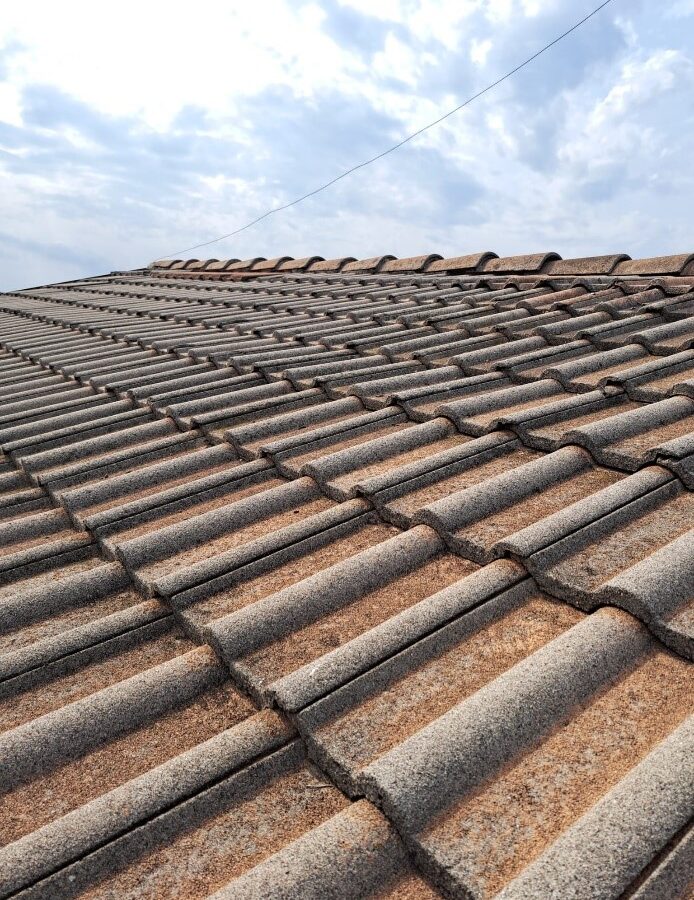
Tile and terracotta roofs pose a significant fall hazard for operators. In the absence of adequate guardrails, it is mandatory to adopt fall prevention and protection measures in compliance with current regulations. Relying on industry professionals is key to ensuring operator safety.
The main risks of tile and terracotta roofs are:
Roof structure analysis: A technician must carry out a thorough assessment of the roof (materials, slope, accessibility, condition) to determine the most suitable system and verify the structure’s ability to withstand loads in case of a fall.
Design: A preliminary project must be drafted to evaluate the actual ergonomics of the lifeline and make the necessary assessments and corrections. If a fully fall-preventive design is not possible, the calculation of clearance (fall distance) must also be considered. This parameter defines the minimum space required so that the operator does not impact the ground or other obstacles in case of a fall.
Insulation and waterproofing assessment: To ensure system compatibility with the existing roof and not compromise waterproofing.
Surface inspection: To guarantee roof safety, the presence of unprotected skylights, shafts, or other hazards must be checked in addition to external fall risks.
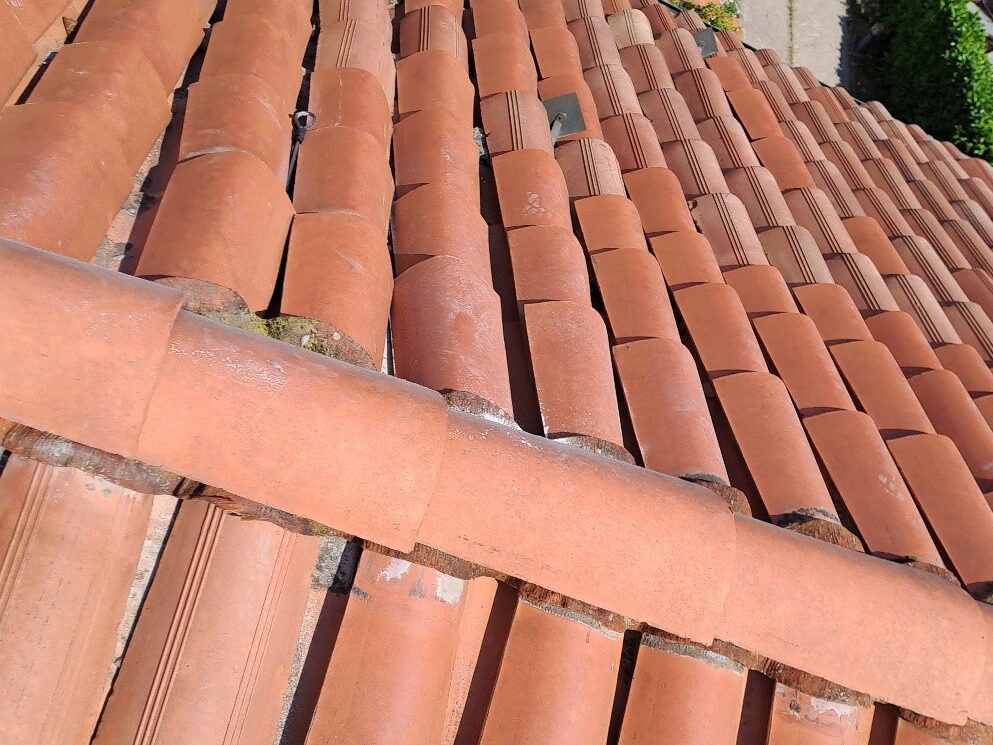
Le linee di ancoraggio flessibili orizzontali (TIPO C), solitamente composte da una fune tesa tra due o più ancoraggi strutturali, sono la soluzione più comune per i tetti in coppi o tegole. Questa tipologia permette all’operatore di muoversi con continuità lungo un percorso esteso. Possono essere rigide o deformabili, a seconda della necessità di limitare la forza di caduta sulla struttura.
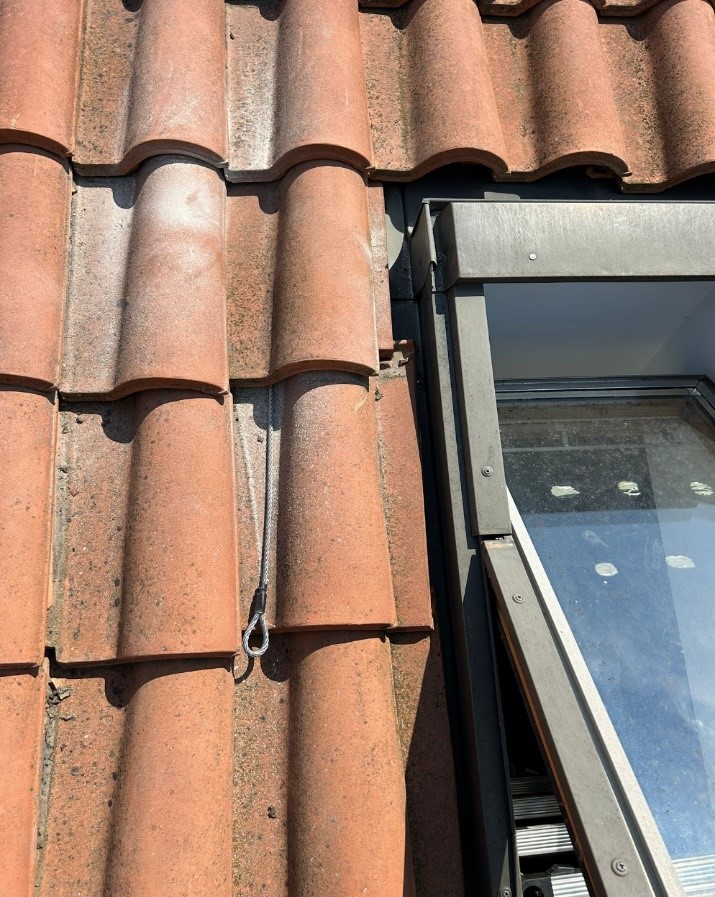
Una valida alternativa però è anche la scelta di ancoraggi singoli (TIPO A), in quanto soprattutto per l’ambito residenziale sottoposto a vincoli paesaggistici o urbanistici particolari va a evitare problematiche estetiche mediante l’uso di ancoraggi sottotegola, che appaiono nascosti appunto tra i coppi o le tegole.
L’installazione dei dispositivi di sicurezza dovrebbe idealmente avvenire durante la fase di costruzione della copertura, così da integrarli correttamente con il manto impermeabile e garantirne la tenuta all’acqua.
Se consentito è sempre consigliabile optare per pali indeformabili, che in caso di utilizzo improprio non richiedano la sostituzione dell’intera struttura, ma solo delle componenti danneggiate del sistema di ancoraggio.
Access and Future Maintenance
The methods of access at height using lifelines are defined by precise safety regulations and procedures, the purpose of which is to ensure maximum protection for workers. The correct approach is based on detailed planning and the use of appropriate equipment. It is essential to plan for secure access to coverage from the outset, not only for system installation but also for all future maintenance activities. This ensures that every intervention can be carried out in complete safety, in full compliance with current regulations.
Access points to coverage must be secure and clearly indicated in the Technical File. They are often equipped with an information tag that shows the fall prevention system data and the date of the last inspection.
Workers must use regulatory-compliant PPE, such as harnesses, lanyards, connectors, and energy sinks. These devices must be periodically inspected and properly worn.
The operator, once he reaches the access point, connects to the lifeline before proceeding. It must always remain attached to the system throughout transit and parking on the cover, following the intended routes and instructions for use.
All workers accessing coverage must have received specific training and practical training in the proper use of fall arrest systems and related PPE.
SPIDERWIKI – Regulations in Italy and Europe for Work at HeightRegulations on work at height are a crucial topic, especially in Italy and Europe, and include a series of rules designed to ensure worker safety. These regulations may seem complex, but we are here to help you understand them! First of all, it is important to emphasize that these rules were created with a single goal in mind: your safety. These regulations include requirements for training, safety equipment, and standard operating procedures. For example, it may be necessary to attend a specific training course or use personal protective equipment (PPE) such as safety belts or harnesses. But how do these regulations apply in practice? And how can they affect your daily work? That’s where our team of experts comes in. We are here to help you navigate the maze of laws and rules, ensuring you can work safely and in compliance. If you want to learn more or need assistance understanding how these regulations apply to your specific sector or situation, do not hesitate to contact us. We can provide personalized advice, answer your questions, and guide you step by step through the process. |
Work at height regulations – Italy
D.Lgs 81/08 – Annex XXI
Regional regulations on work at height safety standards
Technical standards – Italy
UNI 11900:2023 – Unregulated professional activities – Installer of anchoring systems – Required knowledge, skills, autonomy, and responsibility
UNI 11560:2022 – Permanent anchoring systems on roofs – Guide for identification, configuration, installation, use, and maintenance
UNI 11578:2015 – Anchoring devices intended for permanent installation – Requirements and test methods
UNI EN 795/2012 – Personal fall protection devices – Anchoring devices. Fixed anchors, mobile fixed anchors, flexible linear anchors, rigid linear anchors, weighted point anchors
Work at height regulations – Europe
Directive 2001/45/EC
Directive 89/656/EEC (use of Personal Protective Equipment)
It is important to note that these EU Directives are implemented in member states through national legislation.
Remember, specific regulations may vary from country to country within the EU, so it is important to consult local laws.
The weight of the operator or tools can crack or break tiles.
Slippery surfaces due to moss, lichen, or moisture.
Pieces of tile or tools can fall onto areas below.
Lack of training or improper use of fall protection systems.
No: we use dry hooks that work on underlying beams without drilling the tiles.
No: we use dry hooks that work on underlying beams without drilling the tiles.
Stainless steel materials ensure over 15 years of durability and resistance to weather.
Yes: we recommend annual inspections with certified load tests and photographic reports.