What Determines the Cost of a Lifeline System
The price of a lifeline system is not fixed, because every roof has different characteristics. The main factors that affect the cost include:
1. Type of Roof
The structure of the roof is one of the elements that most significantly affects the cost.
Installing a lifeline system on:
- concrete roofing
- wooden roofing
- corrugated metal sheet roofing
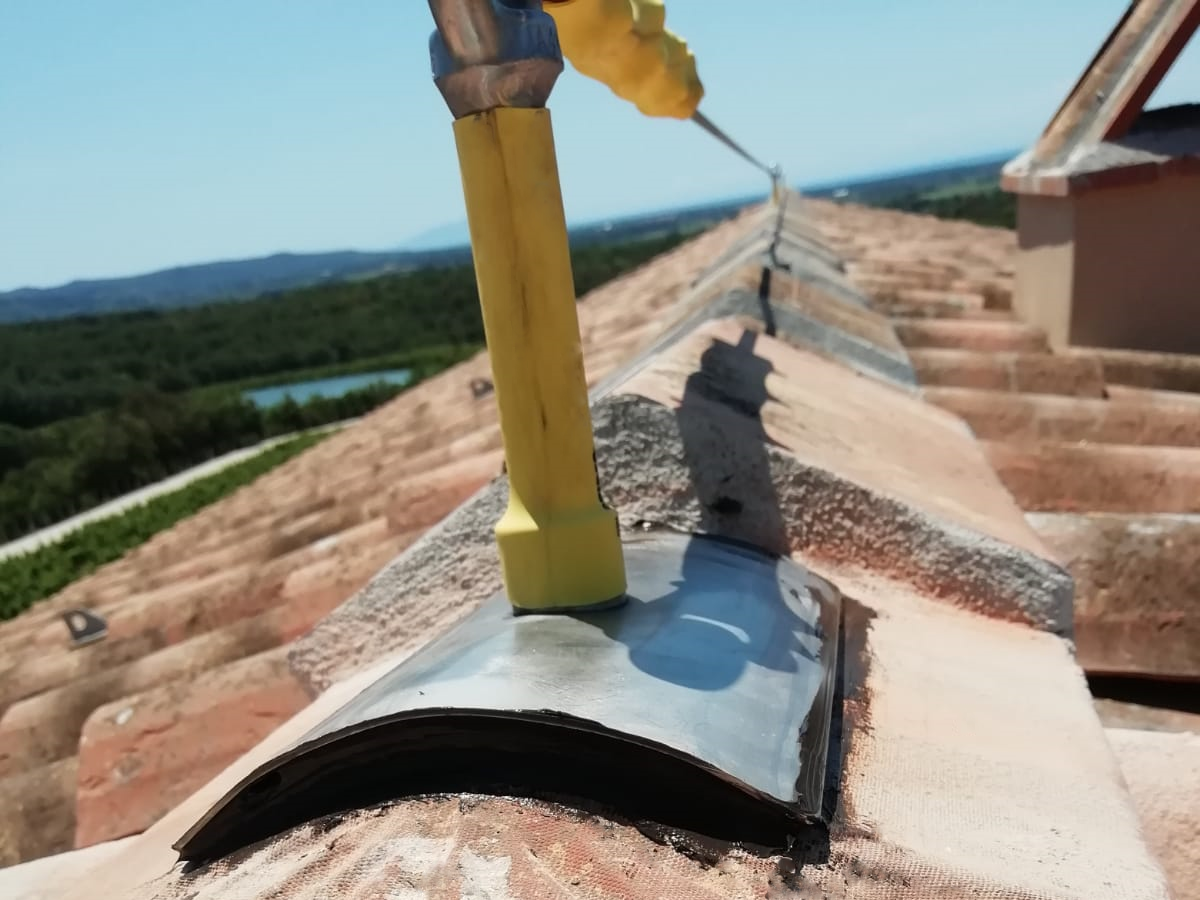
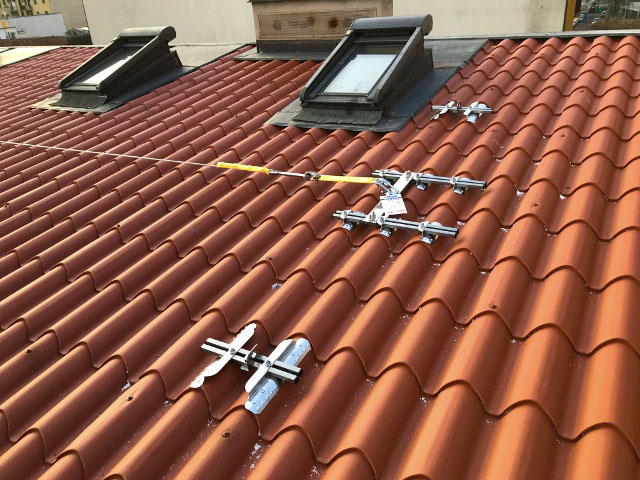
- roofing with tiles or barrel tiles
requires different technical solutions and fastening systems.
2. Length of the Lifeline System
The larger the surface area to be protected, the greater the number of components required, such as:
- anchors
- cable
- supports
- energy absorption elements
For this reason, the cost increases as the length of the system increases.
3. Number of Operators Expected
Some systems are designed for use by a single operator, while others allow multiple people to work safely at the same time. This affects the design of the system and therefore the overall cost.
4. Roof Accessibility
The ease of access to the roof can also influence the price. For example:
- presence of scaffolding
- use of aerial platforms
- very steep roofs or roofs that are difficult to reach
These factors can increase installation times and costs.
5. Regional and Municipal Requirements
In some regions, such as Tuscany, it is mandatory to prepare the technical roof documentation signed by a qualified technician. This service, including the calculation report, usually costs around €800 for a standard roof.
6. State of Conservation of the Structure
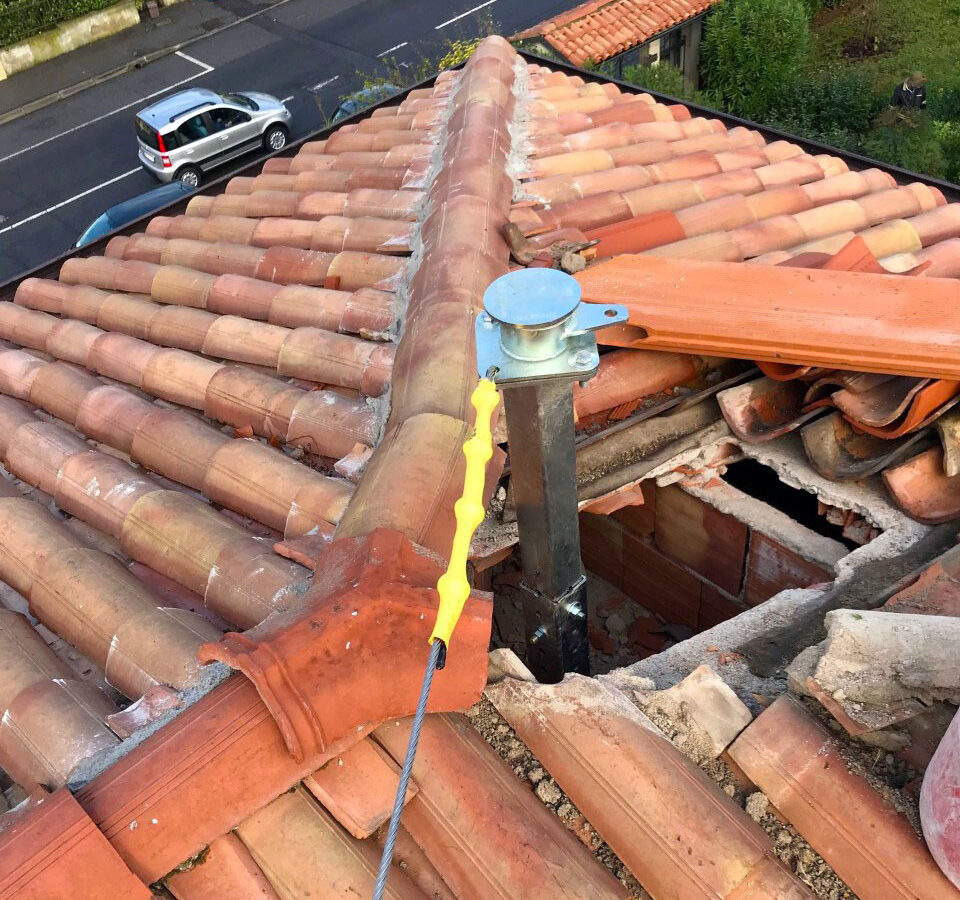
The support structure plays a fundamental role. On reinforced concrete or recently built wooden structures, there are usually no critical issues. By contrast, roofs built with small masonry walls and hollow clay tiles, or deteriorated roofs, require special fastenings that can increase the cost up to five times the standard base price.
Request a Custom Quote
REQUEST
Indicative Price Ranges
To get a more concrete idea of costs, it is useful to consider some typical situations:
| Type of installation |
Characteristics |
Indicative cost (VAT excluded) |
| Installation on a simple roof |
Small roof, easy access, standard structure |
1.000 – 2.000 € |
| Medium-sized roof |
Multiple slopes, greater length, more anchor points |
2.000 – 4.000 € |
| Complex or industrial roofs |
Large surfaces, difficult access, additional systems |
Oltre 4.000 € |
Note: For simple installations, the cost can start from approximately €1,000–1,500. The final price does not depend solely on the device installed, but on the entire process, which includes design, supply, installation and technical documentation.
How Much Does a Lifeline System Cost per Metre?
One of the most frequently asked questions concerns the cost per metre of a lifeline system. In reality, the price per metre is only an indicative reference, as the overall cost depends on many technical factors, including:
- Number of anchor points required
- Type of support structure
- Roof configuration
- Access points
- Additional safety systems
For this reason, the cost of a lifeline system cannot simply be calculated by multiplying a rate by the length of the roof. A proper assessment always requires a site visit or a technical analysis of the roof.
CONTACT US
What Installing a Lifeline System Includes
When discussing the cost of a lifeline system, it is important to consider all the elements of the installation. The service normally includes:
- Design of the fall-arrest system
- Supply of certified devices
- Installation on the roof
- Testing and verification of the system
- Technical documentation and certifications
Practical Example
Let’s consider a residential roof with the following characteristics:
- pitched roof
- lifeline length of approximately 20 metres
- concrete structure
- access via external ladder
In a case like this, the overall cost of the installation can indicatively range between €1,800 and 2,500, including:
- design
- supply of the system
- installation
- technical documentation
Naturally, every project must be assessed on a case-by-case basis.
The Importance of Regulatory Compliance and Civil Liability
Installing a lifeline system is not simply a matter of fixing posts to a roof. Technical documentation must be produced certifying that the system complies with Legislative Decree 81/08 (Consolidated Act on Safety).
The absence of a complete technical file exposes the building manager or property owner to serious criminal liability in the event of an accident. The cost of consultancy is therefore an essential part of ensuring legal and operational protection.
Periodic Maintenance: Protecting the Investment
In addition to installation, regular inspections must be considered (usually annual or biennial, depending on the manufacturer’s guidelines) to check the wear and integrity of the energy absorbers. Proper scheduling of inspections prevents material degradation from compromising safety.
In terms of costs, ordinary maintenance can be expected to be as follows:
| Type |
Indicative cost per service |
| Small residential building or block of flats |
200 € – 350 € |
| Industrial roofs or large surface areas |
Da 500 € a salire |
These costs include a visual inspection, checking the cable tension, tightening the bolts and updating the maintenance log.
2026 Tax Deductions: How to Save on Your Lifeline System
For those who decide to invest in the safety of their roof in 2026, significant tax incentives are available. The installation of a lifeline system falls under extraordinary maintenance work or work aimed at preventing workplace accidents.
Here are the main options for 2026:
- Renovation Bonus (Main Residence): The deduction is confirmed at 50% of expenses incurred for the main residence, with a maximum spending limit of €96,000.
- Renovation Bonus (Other Properties): For second homes and other residential properties, the deduction rate drops to 36%.
- Reduced VAT at 10%: As this qualifies as extraordinary maintenance work on predominantly residential properties, it is possible to benefit from reduced VAT on labour costs and, in part, on materials.
Why Rely on Certified Professionals?
Looking for the lowest price can lead to inadequate solutions. A poorly installed lifeline system is as dangerous as having none at all. Relying on an experienced partner guarantees:
- High-quality materials (corrosion-resistant stainless steel)
- Qualified and certified installers
- Complete documentary support
Why Install a Lifeline System
A lifeline system is a safety system designed to protect operators during work at height, such as maintenance, installations or work on roofs. It is used to work safely during operations such as:
- Roof maintenance
- Installation of systems
- Gutter cleaning
- Work on industrial or residential roofs
The presence of a fall-arrest system reduces the risk of accidents and enables work to be carried out in compliance with safety regulations.
Request a Personalised Quote
As we have seen, there is no fixed answer to the question “how much does a lifeline system cost”, but our technical team will be happy to answer your questions or draw up a no-obligation quote. Fill in the form to be contacted by our experts.
COMPILA IL FORM
FAQ on the Cost of a Lifeline System
The cost can vary depending on the type of roof covering, the length of the system and the installation conditions. Generally, prices can start from around €1,000–1,500 for simple installations, rising to over €4,000 for complex or industrial roofs.
The cost per metre would only be indicative, as the price also depends on the number of anchor points, the roof structure and the conditions of access to the roof. It is not possible to calculate the final cost by simply multiplying a rate by the linear metres.
In many situations, the presence of fall-arrest systems is required to ensure safety during work at height, in compliance with workplace safety regulations (Legislative Decree 81/08). The obligation instead arises from the application of the relevant regional laws or local regulations, depending on the work to be carried out on the roof or for new buildings.
Installation must be carried out by qualified and certified professionals, capable of designing the system and ensuring compliance with safety regulations.