Worker safety at height does not end with the installation of a fall protection system, but continues through proper training, enabling the operator to use the lifeline correctly and in accordance with the designer’s specifications.
The use of inappropriate PPE may expose workers to risks that were not foreseen during the design phase, potentially resulting in minor or serious accidents. For this reason, it is essential to correctly interpret the technical drawings provided by the lifeline supplier, in order to determine which lanyards and devices must be used before and during work at height.
In particular, there are several methods for connecting the harness to the lifeline:
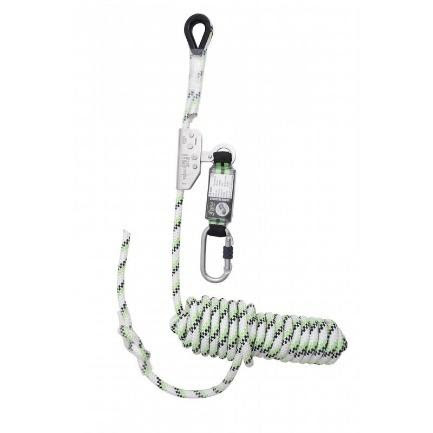
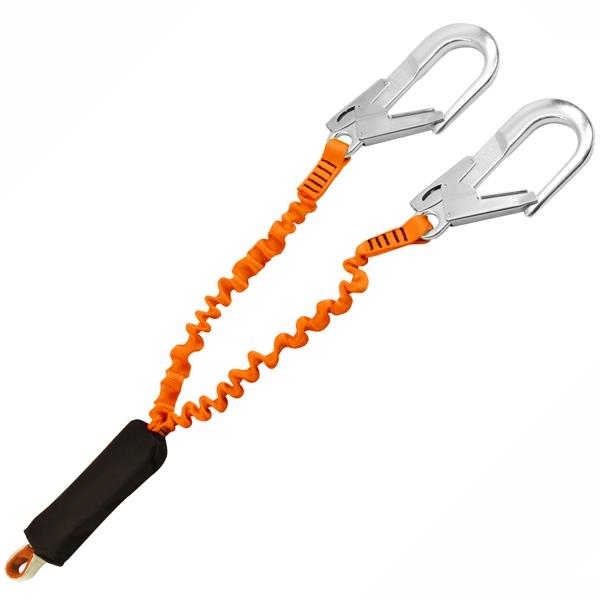
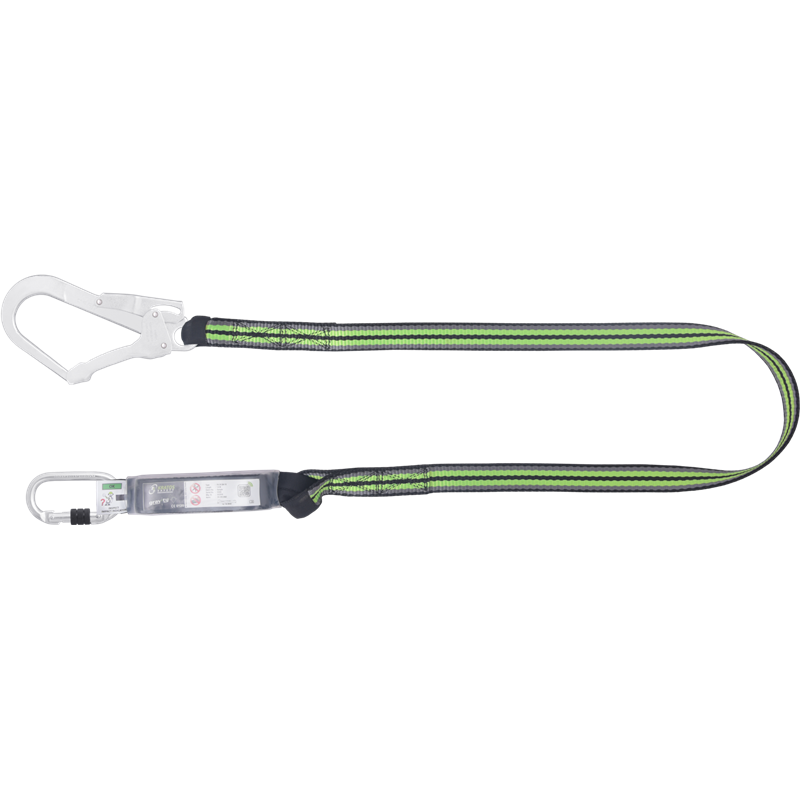
Energy-absorbing lanyard (integrated or separate absorber)
These devices comply with EN 354 and EN 355 (absorber). By regulation, they must not exceed 2 metres in length and are designed for fall arrest. They are available in various configurations, including adjustable or shortened, elastic, twin or Y-shaped lanyards. When used for fall arrest, the device extends significantly to dissipate energy, making it essential to assess the required clear fall distance.
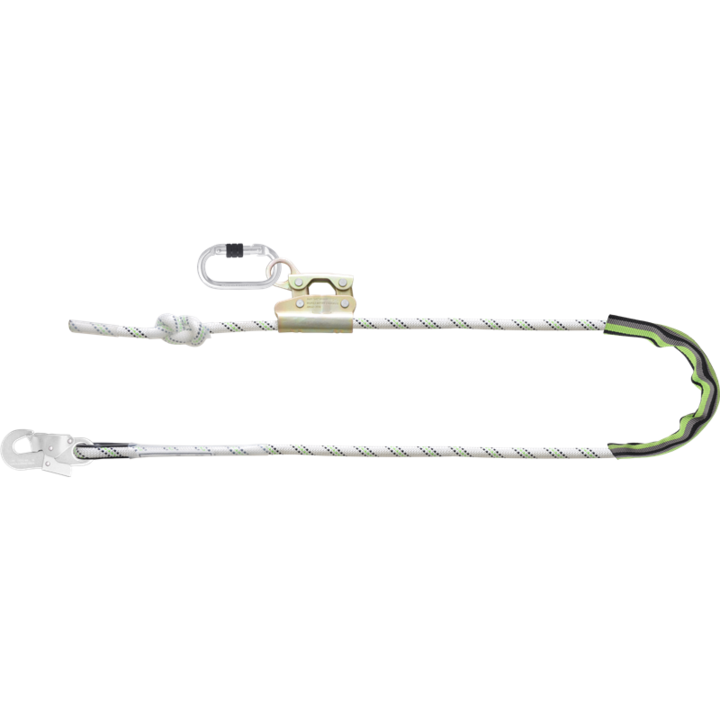
Guided adjustable fall arrester
In accordance with EN 353-2, this device must be used only for restraint, as it is not capable of dissipating the energy of a fall, which could result in fatal consequences. However, some manufacturers integrate an energy absorption system, allowing use for fall arrest. As the name suggests, the device is adjustable and consists of a rope of variable length (up to 20 m in standard configuration) and a slider that remains locked in the selected position unless manually operated.
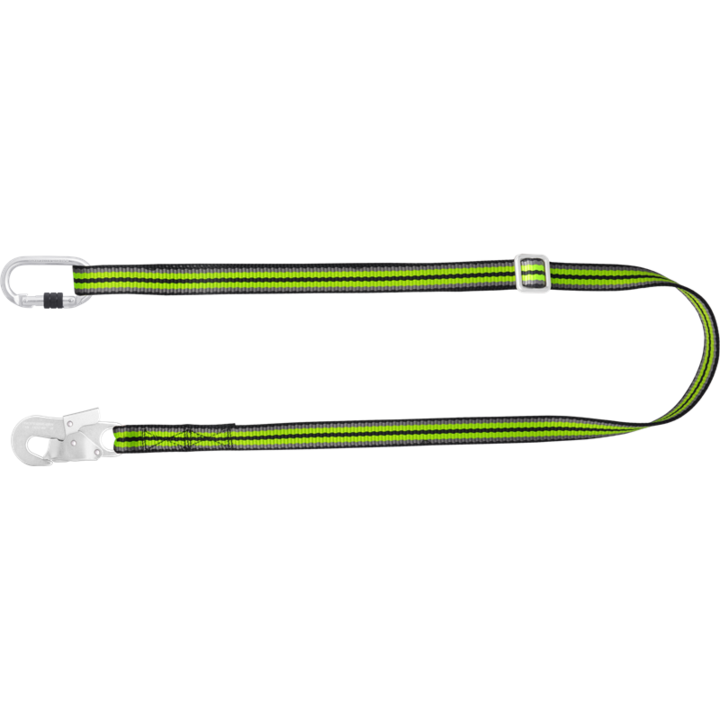
Work positioning and restraint lanyards
These devices are not certified for fall arrest in any configuration and are used for work positioning, i.e. situations where the operator must maintain a stable position with both hands free (e.g. on a MEWP, a tower, or a fall-restrained surface). Their manufacture is governed by EN 358, and they are available in various designs, from simple buckle systems to adjustable self-locking devices.
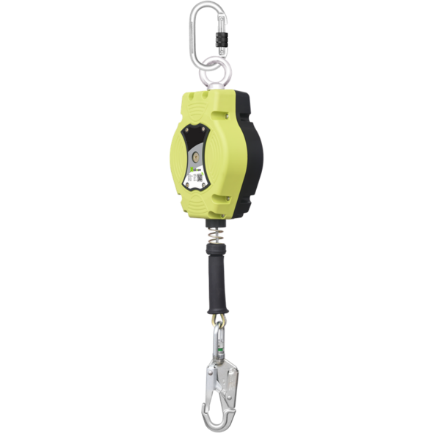
Retractable fall arrest devices
Among the most widely used devices, compliant with EN 360, these are highly ergonomic when used correctly. They are designed for fall arrest, but it is essential to consult the manufacturer’s manual, as some models are intended only for vertical use with an anchorage point located above the worker’s head.
All the devices described above are CE marked, as the applicable standards are harmonized with the EU Regulation on Personal Protective Equipment (EU) 2016/425, and they must undergo annual inspection and maintenance.
Finally, it is essential that operators receive adequate and specific training to correctly select the most appropriate device for the task to be performed.