The term “lifelines” has entered common technical language to identify all systems and devices designed to reduce the risk of a potential fall from height.
When are lifelines required?
Lifelines are required whenever work is carried out at a height exceeding 2 metres above a stable walking or working surface.
How are lifelines defined?
Lifeline design is generally governed by the technical standard EN 795:2012, which defines five types of fall protection systems based on their characteristics:
Type A: Single anchor points
Type B: Temporary removable anchor devices
Type C: Flexible horizontal lifelines
Type D: Rigid horizontal lifelines
Type E: Deadweight (ballasted) anchor devices
Below is a detailed overview of the characteristics of each anchorage type.
Single anchor points (Type A) are stationary anchorage devices such as roof hooks or wall-mounted eye bolts. These systems should be avoided where long distances must be covered, as moving from one anchor point to another requires time-consuming procedures and may discourage workers from using them. This results in poor ergonomic system design. Their use is therefore generally limited to controlling pendulum effects or providing access routes to a main lifeline.
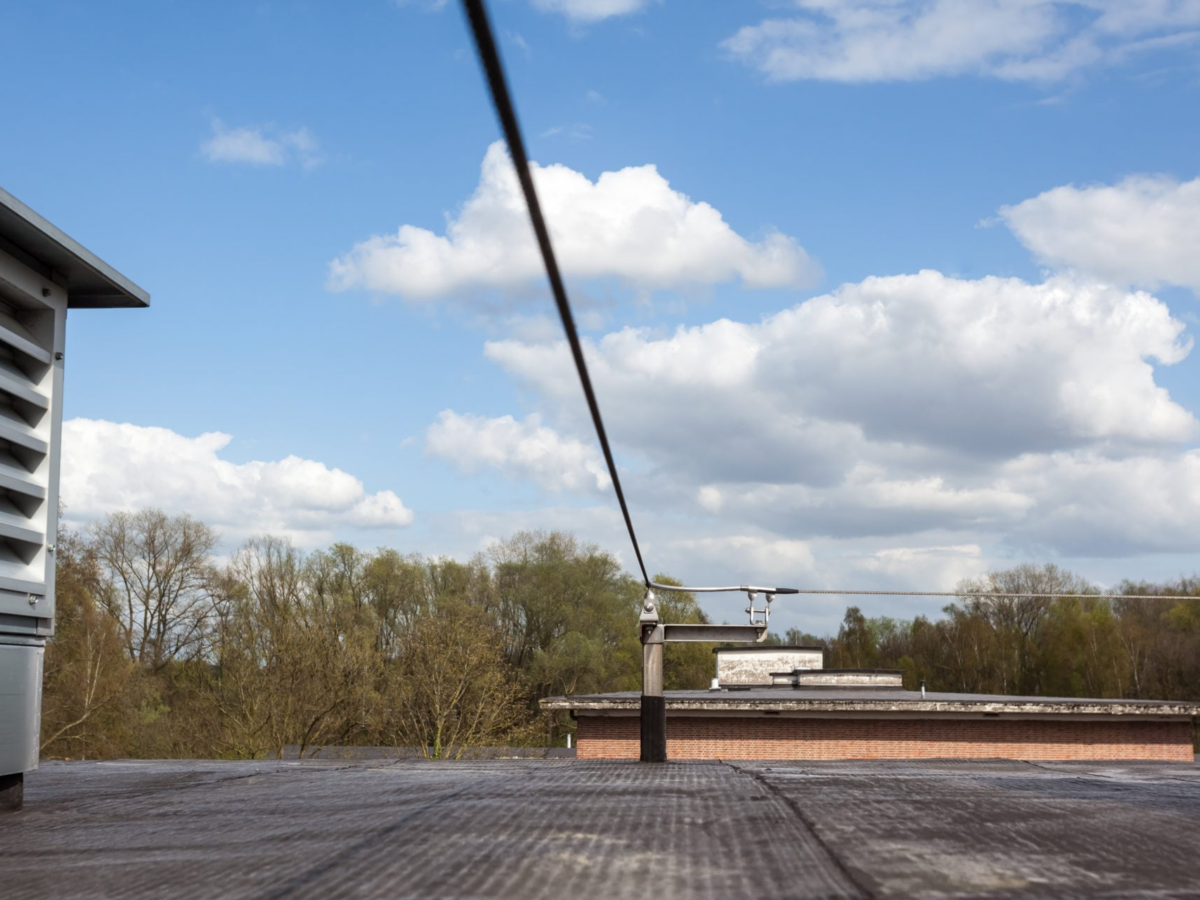
The second and most commonly used solution is Type C, the flexible horizontal lifeline. It consists of two or more supports and a flexible cable, usually steel, to which the worker can connect using personal protective equipment (PPE). This solution offers improved ergonomics compared to single anchor points, as the worker can travel long distances without disconnecting. However, in some cases the available clearance below the lifeline is insufficient due to the required fall clearance (clear height).
To address deflection-related issues, Type D systems (rigid horizontal lifelines) are used. These systems replace the flexible cable with a rigid guide—typically a rail—along which a mobile trolley acts as a moving anchorage point. Due to their reduced deflection, they significantly lower the required fall clearance, making them comparable to Type A systems while maintaining excellent ergonomics by allowing continuous movement without disconnection.
The remaining lifeline types (Type B and Type E) fall under EU Regulation 2016/425, which classifies them as PPE since they can be removed after each use without tools.
Type B includes removable anchorage devices such as tripods, davit arms, and temporary anchor points.
Type E includes anchor devices that rely solely on friction between a ballast weight and the supporting surface for load resistance.
La sicurezza nei lavori in quota non è solo un obbligo normativo, ma una responsabilità progettuale che richiede competenze specifiche. Scegliere il corretto sistema di ancoraggio per tetti industriali o civili significa analizzare la geometria della copertura, la struttura portante e la tipologia di intervento (manutenzione sporadica o frequente).
In questo articolo esploriamo le diverse tipologie di ancoraggio, le normative di riferimento (UNI 11578, EN 795) e i criteri per selezionare la soluzione più adatta, garantendo la massima sicurezza con la qualità 100% Made in Italy di SPIDER Linee Vita.
Richiedi una consulenza gratuitaPer orientarsi tra i tipi di ancoraggio, è fondamentale distinguere tra le norme che regolano i dispositivi permanenti e quelli temporanei. Questa distinzione influisce direttamente sulla marcatura CE e sull’ambito di applicazione (civile o industriale).
Prima di parlare di marcatura CE è importante distinguere tra dispositivi permanenti (prodotti da costruzione) e dispositivi temporanei rimovibili (DPI). La EN 795:2012 riguarda dispositivi destinati ad essere rimossi dalla struttura, ma la marcatura CE si applica solo ai Tipi B ed E; i Tipi A, C e D non sono armonizzati e non rientrano nella marcatura CE.
Secondo la classificazione normativa EN 795:2012 (per dispositivi destinati ad essere rimossi dalla struttura) e la norma italiana UNI 11578:2015 (per dispositivi permanenti), i sistemi di ancoraggio si distinguono in diverse categorie. Di seguito analizziamo tipologie, vantaggi, limiti e quando preferirle.
Sono punti di ancoraggio fissi, progettati per essere fissati stabilmente alla struttura (legno, calcestruzzo, acciaio).
Sono dispositivi temporanei e rimovibili, rientranti nell’ambito dei DPI (Regolamento UE 2016/425). In particolare, nell’ambito della EN 795:2012 la marcatura CE riguarda i dispositivi di Tipo B (e, come vedremo, anche quelli di Tipo E), perché sono quelli armonizzati al Regolamento DPI.
Si tratta della vera e propria linea vita costituita da due o più supporti e da una fune flessibile, generalmente in acciaio, a cui l’operatore può agganciarsi mediante i suoi DPI (Dispositivi di Protezione Individuale) in dotazione.
Per risolvere la problematica della deflessione entrano in gioco i dispositivi di Tipo D (Dispositivo di ancoraggio a linea rigida), ovvero quelle linee vita che in sostituzione alla fune flessibile sfruttano una guida rigida – generalmente un binario – lungo la quale può scorrere un carrello che funge da punto di ancoraggio mobile. Questi dispositivi, essendo rigidi ed avendo deflessioni ridotte, permettono quindi di ridurre il tirante d’aria necessario rendendoli confrontabili con i Tipo A, ma permettendo comunque una buona ergonomia d’utilizzo in quanto l’operatore può compiere lunghe distanze senza mai staccarsi dal dispositivo.
Sistemi che sfruttano il peso (massa) e l’attrito per arrestare la caduta, senza perforare la copertura.
Dubbi sulla soluzione ideale per il tuo tetto?
Ogni copertura ha le sue criticità strutturali e normative. Non rischiare installazioni non conformi: chiedi un’analisi tecnica preliminare agli specialisti SPIDER Linee Vita.
La scelta tra un ancoraggio puntuale, una linea vita o un sistema a binario dipende da un’analisi dei rischi approfondita. Ecco i fattori chiave che guidano la progettazione SPIDER Linee Vita:
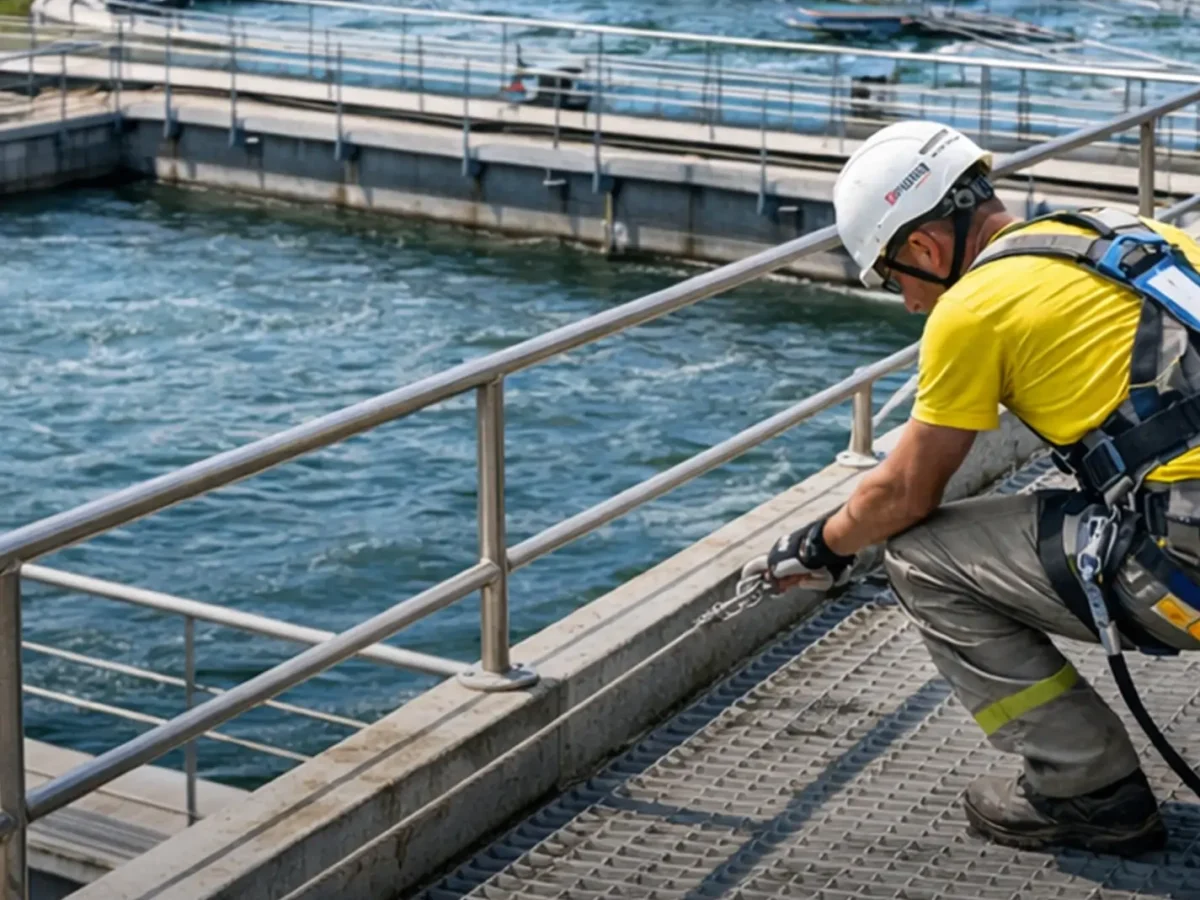
In SPIDER Linee Vita non ci limitiamo a fornire prodotti, offriamo un ecosistema di sicurezza. La nostra ampiezza dell’offerta ci permette di coprire ogni esigenza, dal tetto residenziale al grande impianto industriale.
Ecco cosa ci distingue:
Metti in sicurezza il tuo lavoro in quota
Hai bisogno di progettare un sistema di ancoraggio o di mettere a norma una copertura esistente? Affidati alla qualità certificata e alla filiera corta di SPIDER®. Dalla progettazione all’installazione, pensiamo a tutto noi.