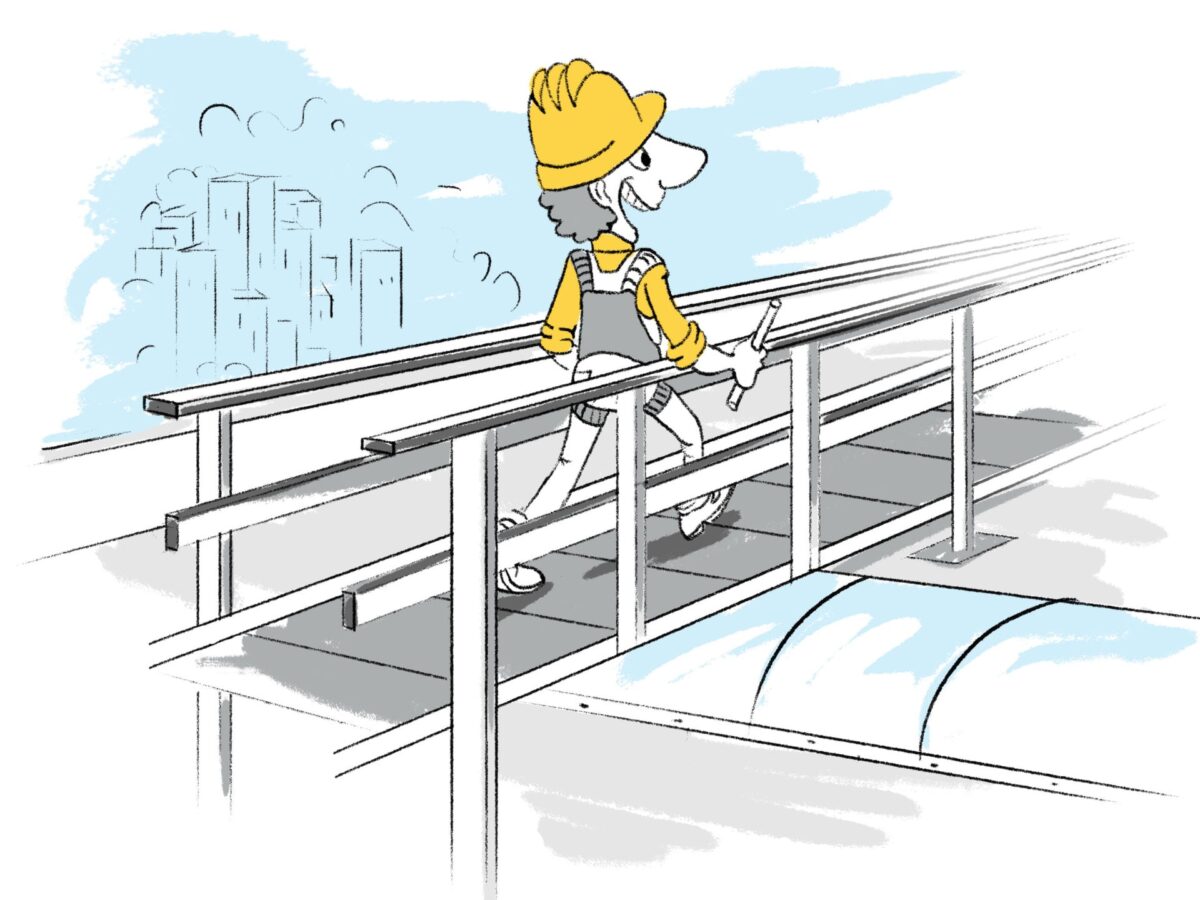
Walkways and step-overs (also referred to as “crossover bridges”) are collective protection systems designed to provide safe and stable access routes on roofs and at height, drastically reducing the risk of slipping, tripping and falling from height during access and maintenance activities.
SPIDER designs, manufactures, installs and maintains aluminium walkways and step-overs for residential and industrial roofs, offering modular and custom solutions to suit:
On many roofs the risk is not only at the edge: it’s also the working surface itself.
Wet conditions, ice, dust, smooth membranes, corrugated metal sheets, slopes, uneven levels and fragile areas make roofs environments where loss of balance is highly likely.
A properly designed walkway allows you to:
In short: a walkway turns a potentially critical area into a permanent access route.
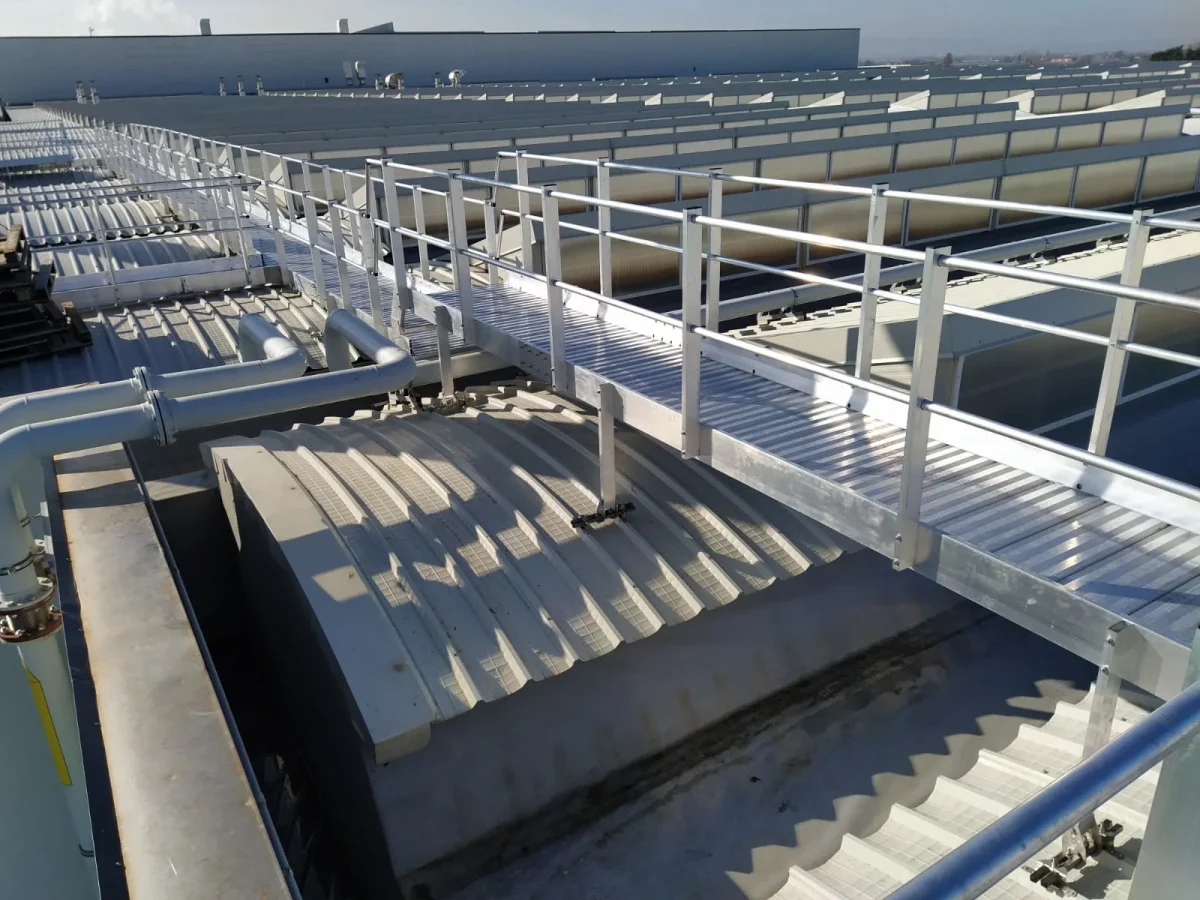
A step-over is a structural crossing element that enables safe passage over:
The step-over prevents operators from improvising hazardous passages and ensures route continuity (one of the most important prevention factors).
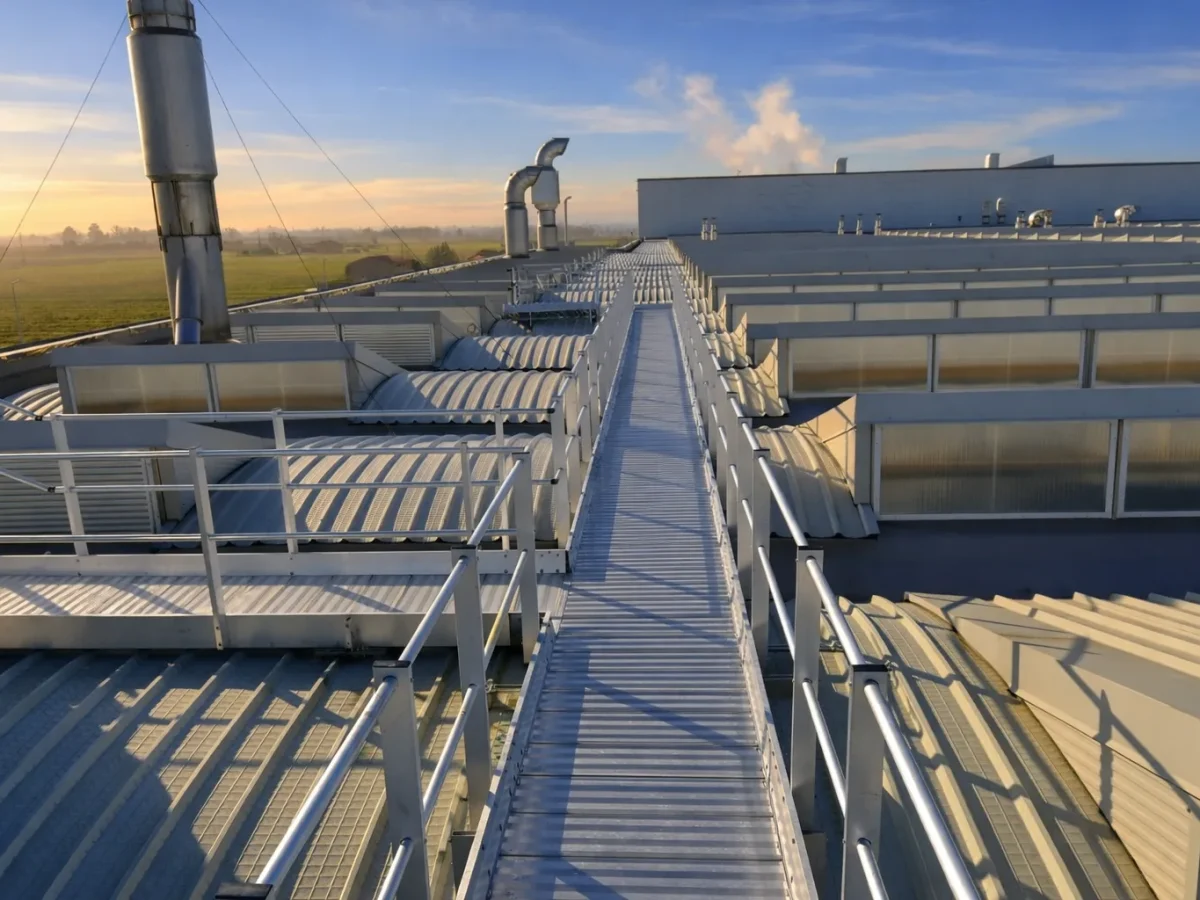
SPIDER walkways and access routes are designed with reference to UNI EN ISO 14122-2:2016, part of the ISO 14122 series dedicated to “permanent means of access to machinery”.
The standard sets requirements for working platforms and non-powered walkways, including non-powered adjustable parts (folding, sliding) and moving parts of fixed means of access.
UNI EN ISO 14122-2:2016 shall be used together with:
UNI EN ISO 14122-1:2016, which provides selection criteria for the means of access and the general requirements.
Important: the standard does not cover motorised access such as lifts or elevating platforms.
An effective walkway is not just a walkable surface: it is a system that must ensure long-term safety under any environmental condition.
1) Anti-slip and draining surface
The walking surface finish must perform properly even in the presence of:
2) Stability and stiffness
The walkway must avoid vibrations, excessive deflection and instability.
The design dimensioning includes:
3) Route continuity
Risks increase in transition areas: level changes, bends, crossings over obstacles, slope changes.
For this reason, SPIDER pays specific attention to:
4) Roof compatibility
Every roof is different. The system must be compatible with:
A “safe” walkway is one that remains safe after years of use, even under harsh environmental conditions and frequent maintenance activities. For this reason, SPIDER® does not provide just a product, but a permanent access system designed and managed over time.
SPIDER® design starts from the logic of the route: the goal is not simply “to install a walkway”, but to create a consistent, continuous and safe path all the way to the maintenance points.
At this stage, modularity delivers clear technical benefits:
The result is an “open” and scalable system, designed to follow the evolution of the building and its rooftop installations.
SPIDER® provides maintenance and periodic inspections to ensure the route remains compliant and safe, by checking:
Scheduled maintenance helps maintain a high safety level and ensures operational continuity, preventing urgent and costly corrective actions.