In a work environment, ensuring safe and reliable vertical access to elevated areas is paramount. At Spider, we specialise in designing, manufacturing, and installing vertical ladders with safety cages.
Related Products
Vertical Ladder with Safety Cage: Unparalleled Safety & Access
In a work environment, ensuring safe and reliable vertical access to elevated areas is paramount. At Spider, we specialise in […]
TIPTRAP ladders
Sorry, this entry is only available in Italiano.
SPIDLINE0120
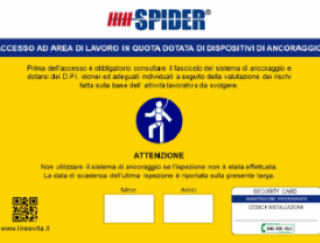
Civil access sign The sign is placed at the access point to make it r…
SPIDLINE0101
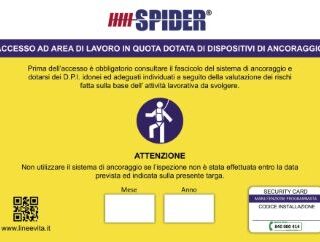
Industrial access sign The sign is placed at the access point to make…
TipTrap Fixed Ladder
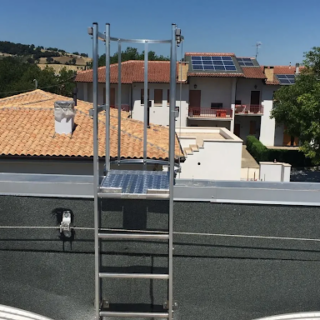
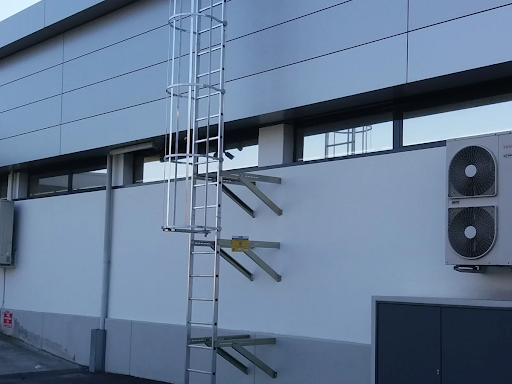
The TipTrap fixed ladder is a vertical access system designed in compliance with UNI EN 14122-4:2016 standard, which defines construction requirements and safety criteria for permanent means of access to machinery and industrial structures. Each ladder is engineered and configured according to the specific characteristics of the structure where it will be installed, ensuring perfect integration with the working environment and maximum operational safety.
Features:
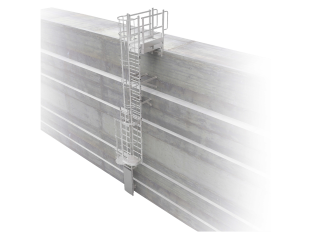
- The TipTrap ladder consists of two vertical extruded aluminum uprights with anti-slip rungs placed between them.
- The structure is modular and can be built with one or more vertical sections, with optional intermediate or resting platforms to facilitate use at great heights.
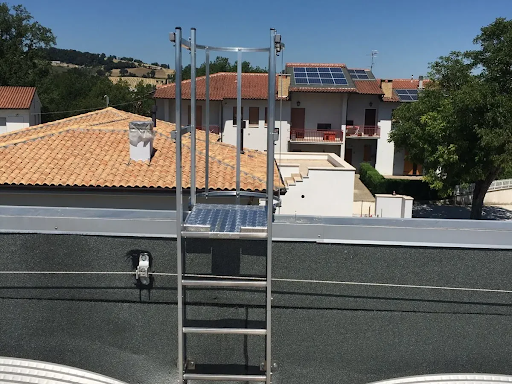
- The safety cage, made of aluminium hoops and vertical connecting plates, limits the risk of falling and guides the user along the entire length of the ladder.
- All components are made of lightweight aluminium alloy, resistant to corrosion and atmospheric agents, and require no painting or protective treatment.
- Each ladder is assembled according to the technical drawing provided by the manufacturer, respecting the dimensions and assembly sequence indicated in the installation manual.
Now, let’s examine the vertical cage ladder in more general terms and identify its key characteristics.
What is a vertical ladder with safety cage?
A vertical ladder with safety cage, often referred to as a cage ladder, hoop ladder, or safety ladder cage, is a fixed access ladder equipped with a protective enclosure (cage or hoops) designed to prevent falls from height. This ladder protection cage is typically constructed from metal hoops and vertical stiles, forming a safe passage for users ascending or descending. Enclosed ladders are crucial in environments where vertical access is frequent or where there is significant risk of falling and offer an essential layer of fall protection that goes beyond standard fixed ladders.
Our systems provide a secure, enclosed ascent, making them an indispensable component of any comprehensive fall protection strategy.
Now we will discuss the key features of cage ladders, specifically the Spider’s models.
Key features of Spider cage ladders
Spider fixed ladder with safety cage solutions are engineered with precision and built to last. Our commitment to quality and innovation ensures every system offers superior performance and peace of mind.
- Robust construction: manufactured from high-grade materials like galvanised steel or marine-grade aluminium, ensuring exceptional durability and resistance to harsh weather conditions.
- Ergonomic design for comfortable and safe ascent, featuring non-slip rungs and ample climbing space within the hooped access ladder.
- Integrated fall protection: the ladder safety hoops provide a continuous protective barrier, mitigating the risk of falls and enhancing user confidence.
- Customisable solutions: we offer bespoke design and fabrication to meet specific site requirements, including varying heights, widths, and access points for your roof access ladder with cage.
- Easy installation: our systems are designed for straightforward, efficient installation, minimising disruption to your operations.
- Low maintenance: built for longevity, requiring minimal upkeep, reducing long-term operational costs.
Need to understand more about our product specifications? Download our detailed product brochure today!
DOWNLOAD PRODUCT BROCHURE
The Spider advantage: our strengths in vertical access
A safe access ladder is the result of a structured engineering process — not simply a “catalogue choice”.
1) Technical assessment and risk evaluation
- access height and expected frequency of use;
- available space and site/architectural constraints;
- user profile (internal staff or external maintenance teams);
- environmental exposure (wind, ice, corrosion risk);
- applicable regulations and standards (UNI EN ISO 14122 – 4:2016).
2) Ladder design and critical aspects
- selection of the most suitable solution (steps or fixed rungs);
- correct design of landings, platforms and transitions;
- definition of fall protection systems, accessories and safety upgrades;
- design considerations for inspection and long-term maintenance.
3) Professional installation (best practice)
- fixings correctly sized and compatible with the supporting structure;
- controlled installation process with full traceability of work;
- final checks to confirm stability, correct positioning and safe usability.
4) Maintenance and scheduled inspections
Spider offers scheduled inspections to verify:
- structural integrity and absence of deformation;
- corrosion or progressive component deterioration;
- stability of fixings and anchoring points;
- effectiveness of fall protection devices and accessories.
Ready to enhance your workplace safety with a custom steel ladder with cage?
Applications of cage ladders
Cage ladders are incredibly versatile and are essential in any setting where safe and secure vertical access is required for maintenance, inspection, or operational purposes.
Industrial & Manufacturing
- Access to machinery platforms, overhead gantries, and processing equipment.
- Maintenance access for silos, tanks, and chemical plants.
- Loading bay and dock access points.
- Industrial chimneys and ventilation systems.
Commercial & Public Buildings
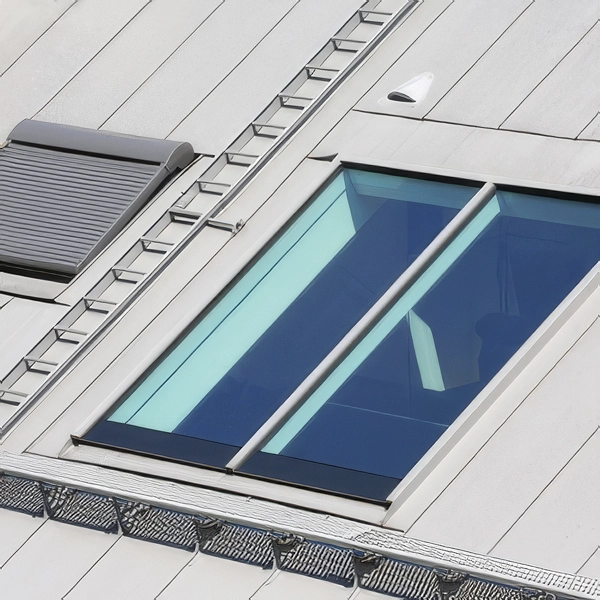
- Roof access ladder with cage for HVAC units, plant rooms, and general roof maintenance.
- Emergency exit routes from elevated sections.
- Access to lighting rigs and suspended ceilings in large venues.
Construction & Infrastructure
- Temporary or permanent access for construction sites, scaffolding, and structural works.
- Access to bridge inspections points, utility shafts, and communication towers.
- Water treatment plants and pumping stations requiring vertical ladder with safety cage access.
Utilities & Energy
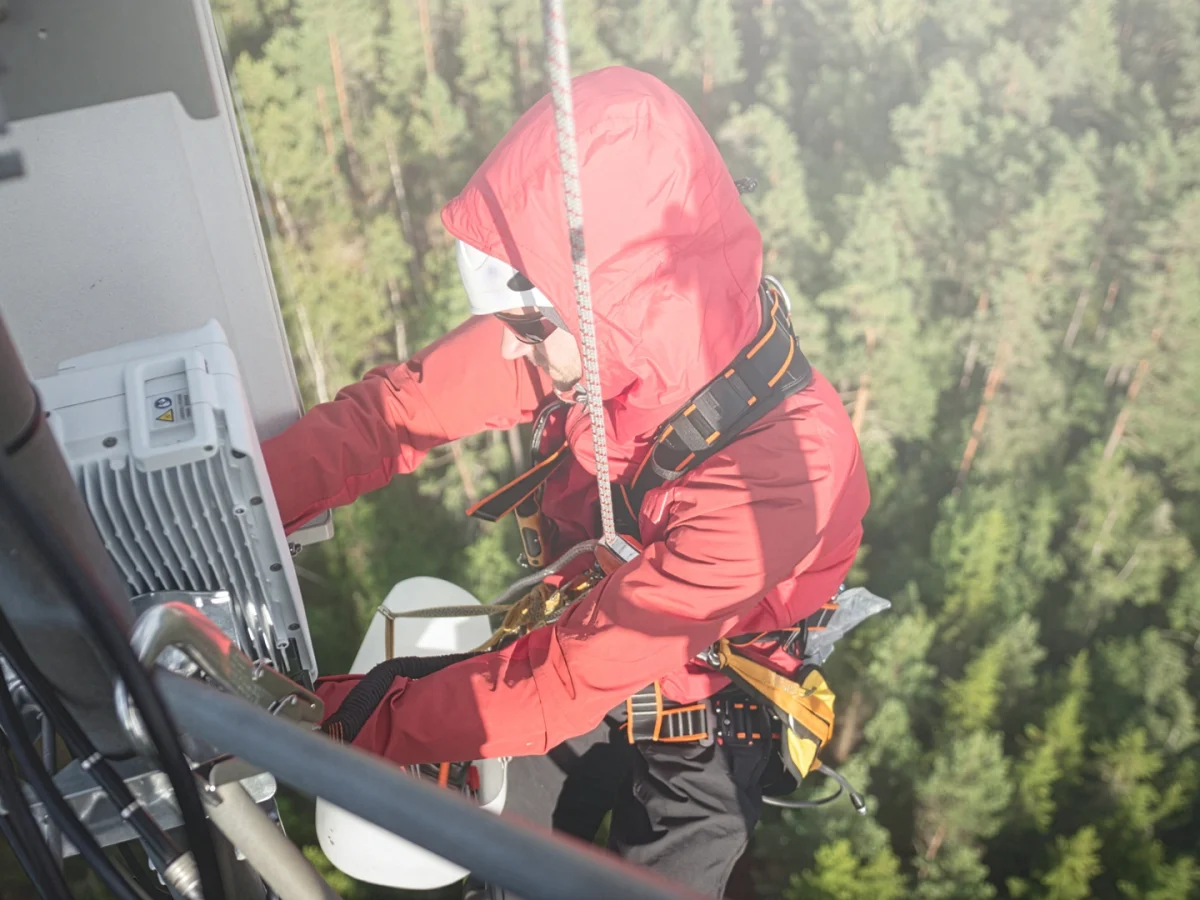
- Access to electrical substations, wind turbines, and power generation facilities.
- Telecom masts and broadcast towers.
No matter your industry, Spider can provide a bespoke ladder protection cage solution tailored to your specific operational needs and environmental conditions.
Want to know more about our solutions? Discover all our lifeline systems.
CONTACT US
Regulations for safety ladder cages
Compliance with European safety standards is essential for fixed ladder installations with protective cages. In the EU market, the main technical reference for permanently fixed vertical ladders is UNI EN ISO 14122-4:2016, which defines design, construction and safety requirements for fixed ladders used as permanent means of access to industrial structures and machinery.
Key aspects covered by UNI EN ISO 14122-4:2016 include:
- Ladder geometry & safety clearances: requirements for safe climbing space, widths and distances from surrounding obstacles.
- Rung design & spacing: consistent, safe stepping and anti-slip solutions to improve user stability.
- Safe transitions and access points: requirements for safe egress at the top and proper landing solutions.
- Rest platforms and modular configurations: design criteria for ladders with multiple sections and intermediate platforms when needed.
- Structural integrity and fixing systems: guidelines for secure anchoring and stability of the ladder in its operating environment.
- Materials and corrosion resistance: suitability for outdoor exposure and long-term durability.
Where an additional guided fall protection system is required, components can be designed and supplied in accordance with EN 353-1 (guided type fall arresters on a rigid anchor line), ensuring an integrated approach to fall prevention for vertical access routes.
Spider certifications: your guarantee of safety
At Spider®, safety is backed by a certified management system and independently verified processes. Security Building Service S.r.l. operates under an Integrated Management System certified by TÜV Rheinland to:
- ISO 9001:2015 (Quality Management): ensuring consistent product and service quality across the entire lifecycle.
- ISO 14001:2015 (Environmental Management): supporting responsible environmental practices in our operations.
- ISO 45001:2018 (Occupational Health & Safety Management): reinforcing a proactive approach to workplace health and safety for our teams and all end users.
These certifications cover the design, supply, installation, inspection, maintenance and marketing of fall protection systems and access-at-height systems, providing a clear, documented guarantee of reliability, traceability and continual improvement.
Explore our Certifications & Accreditations
Maintenance for your fixed ladders with safety cages
Regular maintenance is crucial to ensure the continued safety and operational integrity of your fixed ladders with safety cages. While Spider cage ladders are designed for durability and low maintenance, periodic inspections and upkeep are essential to comply with safety regulations and extend their lifespan. Neglecting maintenance can lead to compromised safety, potential incidents, and costly repairs.
Key maintenance considerations include:
- Structural integrity and absence of deformation;
- Corrosion and component deterioration;
- Fixing stability;
- Effectiveness of fall protection and accessories;
- Regulatory Compliance Checks: Verify that the ladder still meets the requirements of UNI EN ISO 14122-4:2016 and other relevant safety standards.
Spider can guide effective maintenance schedules and can also offer professional inspection and maintenance services for your vertical ladder with safety cage systems. Regular checks are a small investment for continuous safety and compliance.
Installation process: best practice and full traceability
- Preliminary Verification
Before installation, our team carries out a detailed on-site assessment to confirm that the system can be fitted safely and correctly. This includes:
- evaluation of the supporting structure (materials, condition, thickness and any signs of deterioration);
- confirmation of the operational conditions defined during the design phase;
- verification of clearances, geometry and access to the installation area.
- Mechanical Installation of the System
All components are installed following controlled procedures to guarantee correct performance over time, including:
- precise horizontal and vertical positioning of each element;
- tightening and fixing operations performed according to the manufacturer’s specified torque values;
- use of certified fasteners suitable for the specific structure;
- continuity and alignment of flexible or rigid components (lifelines, rails or tracks);
- prevention of any interference with existing structures or service systems.
- Final Installation Inspection
Once installation is completed, the system is thoroughly checked to ensure:
- correct assembly and overall structural integrity;
- absence of defects, mechanical play, torsion or unintended stress on components;
- full consistency with the approved design documentation.
- Declaration of Correct Installation
Upon completion, we issue the official declaration, which:
- certifies compliance with UNI 11560:2022 if fall protection anchors are included;
- becomes part of the technical file of the fall protection system;
- represents mandatory documentation for commissioning, routine inspections and long-term maintenance.
Get a custom quote for your project
CONTACT US
Frequently asked questions about cage ladders
In Europe, fixed vertical ladders used as permanent means of access can be designed according to UNI EN ISO 14122-4:2016, which defines key safety requirements for geometry, rung configuration, transitions, and structural integrity. Where additional fall protection is required, guided fall arrest systems can comply with EN 353-1 (rigid anchor line).
In accordance with the new UNI 11962:2024 standard, a cage ladder should be inspected at least once every two years. One year if a fall protection system is included.
While fixed ladders with safety cages are designed for durability, regular inspections are vital. According to the Work at Height Regulations 2005 and best practices, thorough visual inspections should be conducted periodically, ideally every 6-12 months, and after any significant event (e.g., severe weather, impact). Users should also conduct pre-use checks. Spider recommends a structured maintenance program to ensure ongoing safety and compliance.
The most common materials for cage ladders are galvanised steel and aluminium. Galvanised steel offers exceptional strength and corrosion resistance, making it ideal for industrial and outdoor use. Aluminium is lighter, also corrosion-resistant, and requires minimal maintenance, often preferred where weight is a factor or for aesthetic reasons. Stainless steel can also be used for highly corrosive or specialised environments.
Yes, all Spider cage ladder systems and fall protection solutions are certified and comply with relevant UK and international standards, including BS 4211. Our certifications reflect our commitment to engineering excellence, product quality, and safe installation practices, providing our clients with the assurance of robust and reliable safety systems. We are dedicated to ensuring every safety ladder cage meets the highest benchmarks for performance and safety.