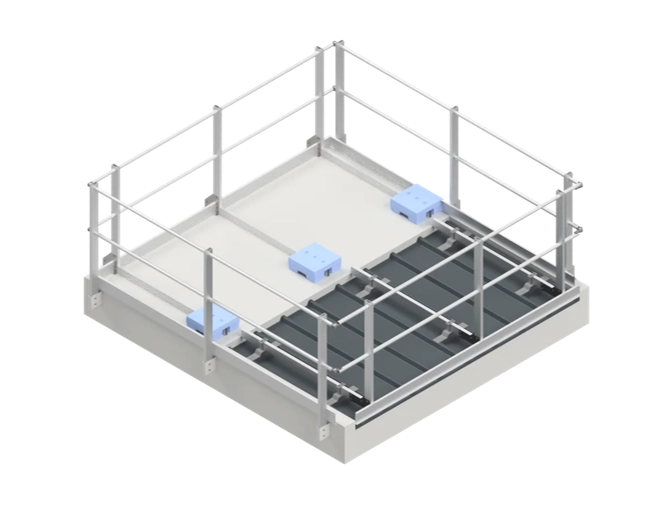
When it comes to preventing falls from height, the most effective and recommended choice is always the same: collective protection before personal protective equipment (PPE).
A guardrail is one of the main collective protection systems, because it creates a permanent or semi-permanent physical barrier between the operator and the fall hazard, drastically reducing reliance on procedures, training and correct PPE donning.
SPIDER designs, manufactures, installs and maintains fall-protection guardrails for roofs, terraces, technical plants and elevated access routes, delivering solutions compliant with applicable standards, integrated into the architectural context and suited to real operating conditions.
A guardrail is used to:
In many situations—especially on roofs with frequent access—guardrails are also the most efficient solution from a management perspective: once installed and properly maintained, they simplify work planning and limit exposure to risk.
It is important to distinguish between:
This distinction is essential because standards, tests and verification criteria are not the same.
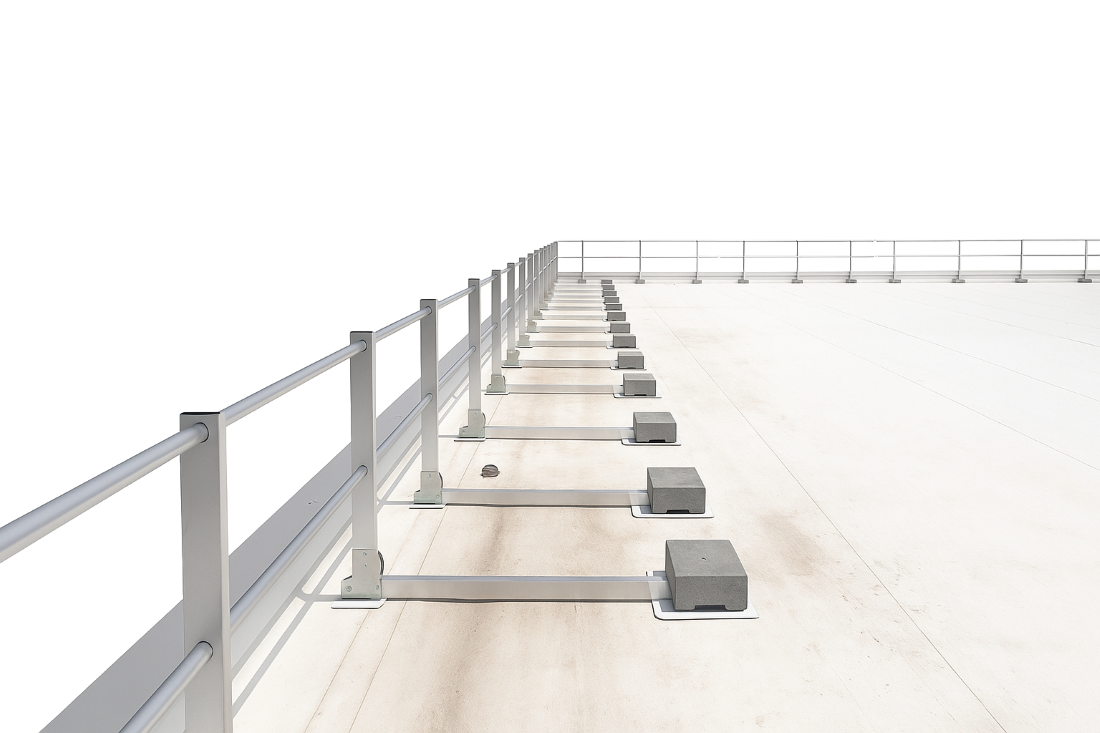
The NTC (Ministerial Decree, 17 January 2018) regulate, among other things, the actions to be considered when designing structural elements, including guardrails installed in buildings and structures.
For guardrails (or top rails), linear horizontal loads applied at the top edge are considered and used for local verification.
In practice, an NTC-compliant guardrail must demonstrate it can withstand specific horizontal actions depending on the intended use of the structure (use categories). This is especially crucial when the guardrail becomes an integral part of the safety of a building or infrastructure.
UNI EN ISO 14122-3:2016 is a technical standard for machinery safety and sets requirements for stairs, stepladders and guardrails as permanent means of access to machinery or plant.
In the world of roofs and technical installations, this standard is often used as a reference for:
UNI 11996:2025 is the most recent Italian standard dedicated to permanent fall-protection guardrails: it defines safety requirements, test methods and conditions of use for guardrails intended to protect against falls from height on buildings, infrastructures and roofs.
The standard has been available since 27 November 2025.
An important aspect is that UNI 11996:2025:
For companies and designers, this means having a dedicated and clear technical reference, useful both during design and in defining inspections and long-term management.
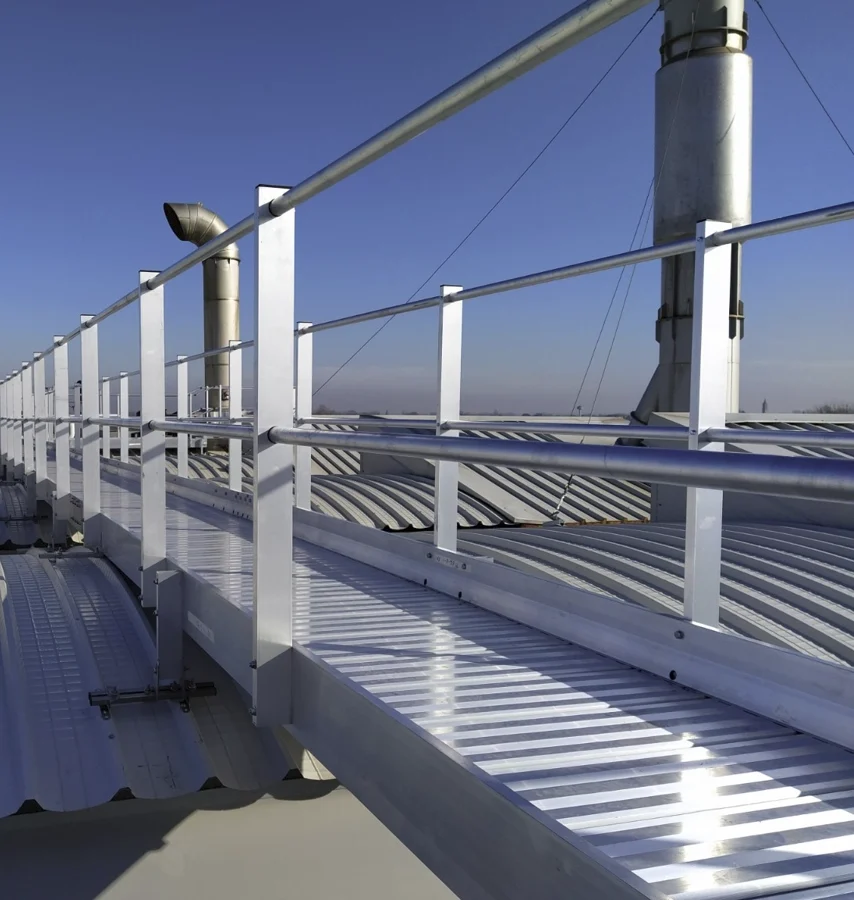
For SPIDER, a guardrail is not a “catalogue product” to be forced into place: it is a system developed through a structured technical process.
“Permanent” safety exists only if the system remains effective over time. That is why SPIDER provides planned maintenance and periodic inspections, with particular attention to: