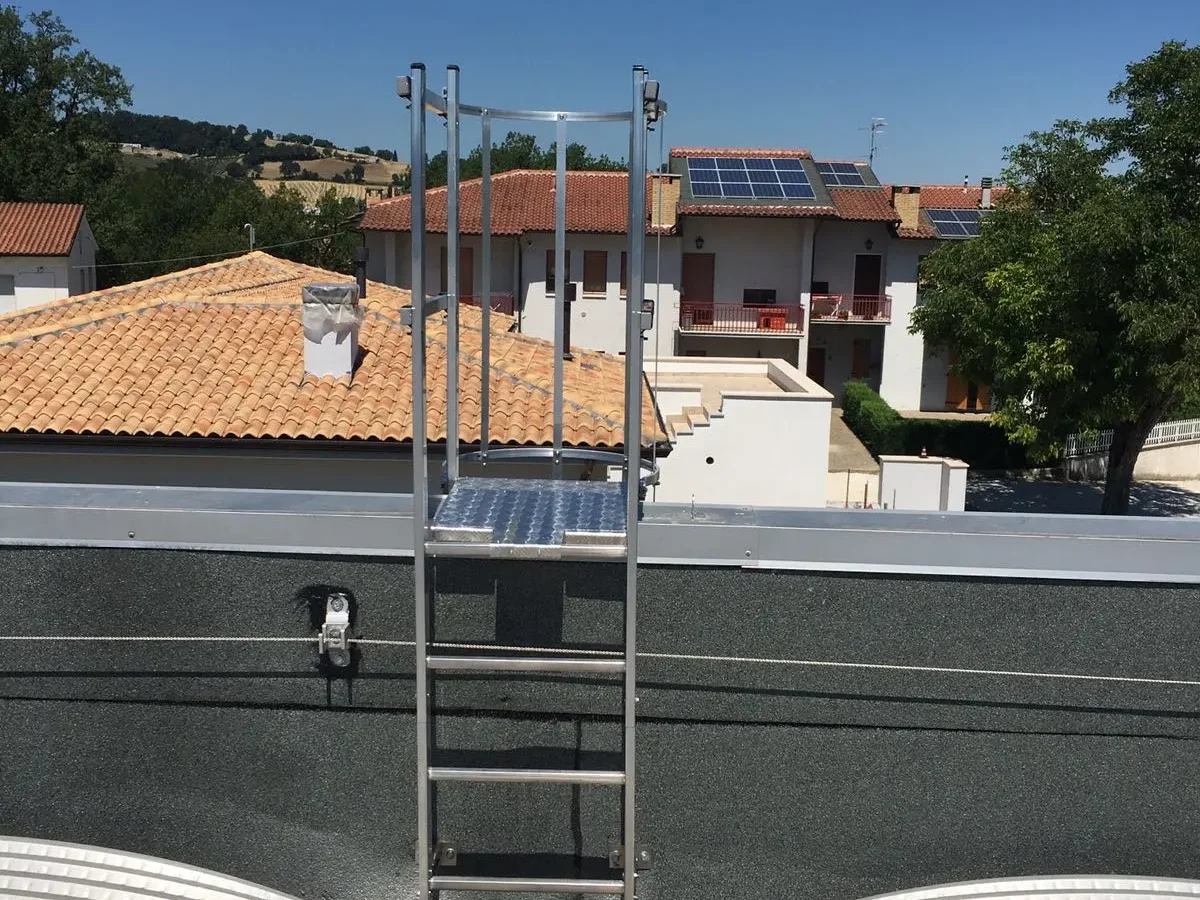
Access ladders are essential devices to ensure safe entry and safe movement towards roofs, plant equipment and technical areas.
When access at height is frequent (scheduled maintenance, inspections, activities on rooftop systems), the ladder must be designed as a permanent means of access, not as an “ad-hoc” solution.
SPIDER designs, manufactures, installs and maintains access ladders and integrated systems for working at height, with a complete technical approach: from risk assessment to selecting the safest configuration, all the way through long-term management.
Many incidents occur during access: loss of grip, slipping, fatigue, weather conditions, manoeuvres in confined spaces or while carrying equipment.
An effective access ladder must provide:
This is the difference between a generic product and a solution truly installed to best practice standards.
Legislative Decree 81/2008 sets out safety principles and requirements for the use and construction of ladders in workplaces and construction sites.
Article 113 states, among other points, that fixed stairways intended for normal access must be built and maintained to withstand the expected loads, and that open sides must be provided with a standard guardrail or equivalent protection.
UNI EN ISO 14122-4:2016 is the technical standard that specifies requirements for fixed ladders forming part of a fixed machine, including non-powered adjustable parts and moving parts of the ladder system.
It is also widely used as a reference for technical and maintenance access (plants, industrial sites, industrial roofs), as it provides clear criteria for:
ladder configuration,
components (rungs/steps, stiles, landing/exit points),
protections and accessories (hatches, gates, etc.)
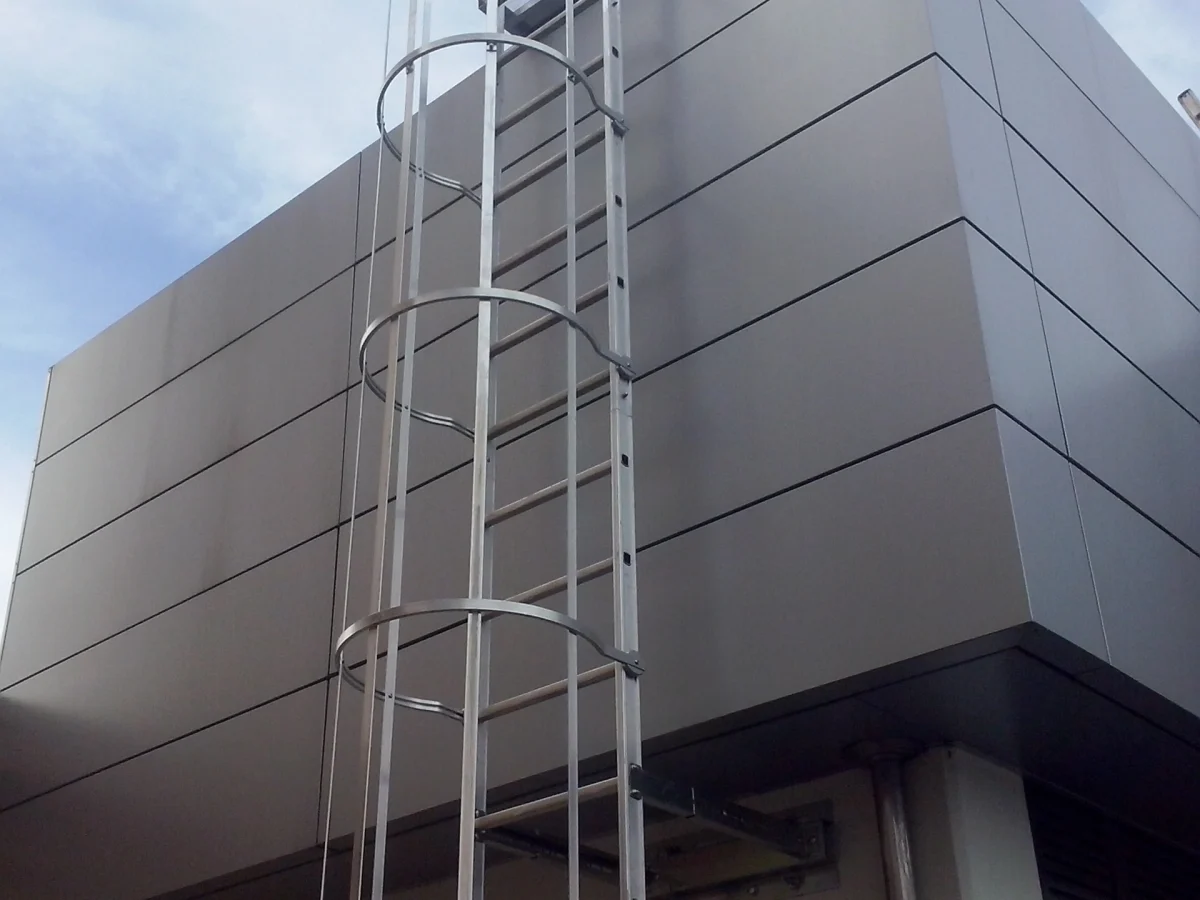
UNI 11962:2024 is the most recent Italian standard dedicated to permanent vertical ladders, with or without a safety cage, characterised by an inclination greater than 75°, fixed to a support structure and used as a means of access to buildings, infrastructures, works, structures and installations where there is a risk of falling from height.
The standard defines safety requirements, test methods and conditions of use.
This standard is particularly relevant for traditional “marine ladders” (vertical fixed ladders) and for all technical vertical access routes.
A permanent access ladder is assessed mainly through the details, because most issues arise from poorly designed “weak points”.
Protection must be designed according to:
With the introduction of UNI 11962:2024, permanent vertical ladders now have specific requirements and test methods, which are useful to define solutions that are truly controllable and verifiable.
Aluminium and steel (including stainless steel) are the most common options, but the correct choice depends on:
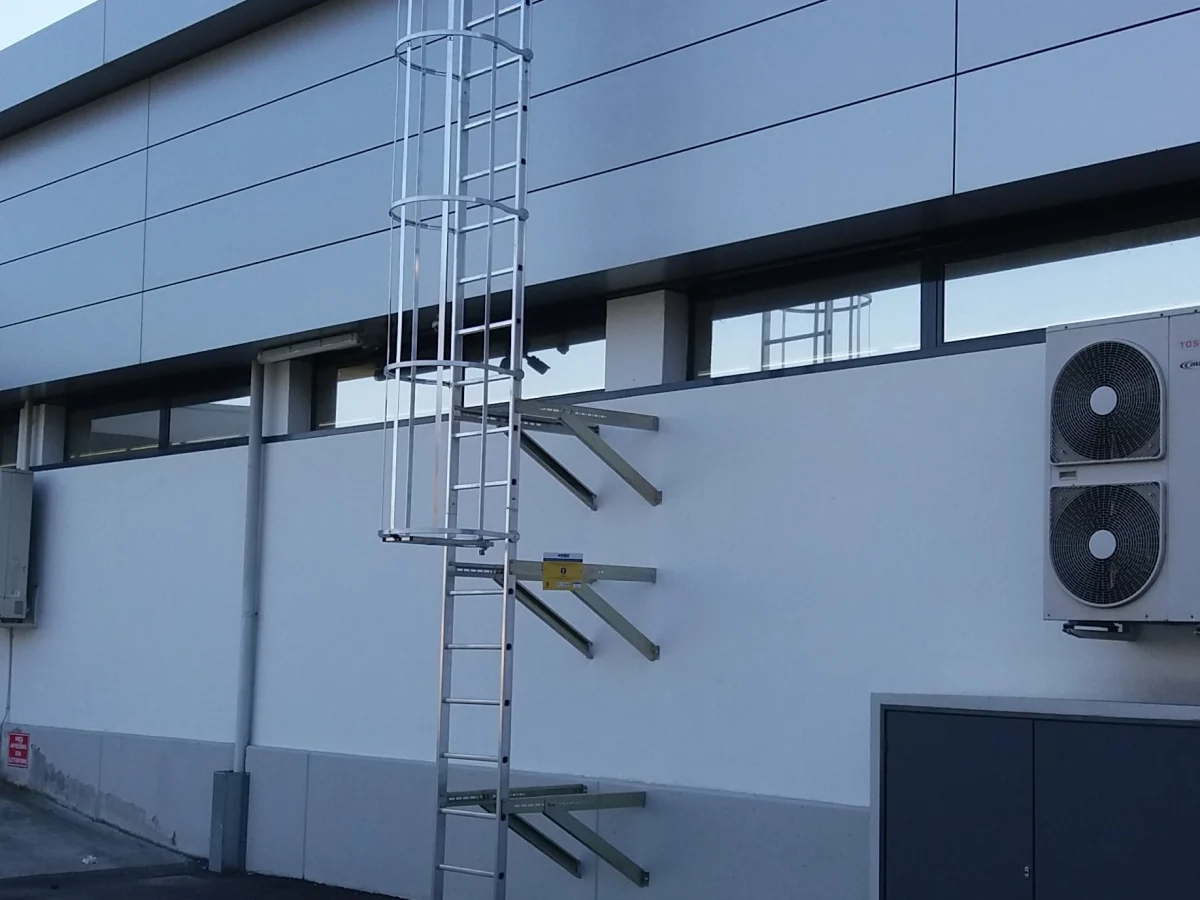
Often, the ladder is only the first link in the chain. To achieve real safety, the entire route must be secured—from the access point all the way to the work area.
For this reason, SPIDER often designs integrated solutions including:
Result: lower risk while moving and working at height, improved operational control, and simpler management for maintenance teams and external contractors.
A safe access ladder is the outcome of a technical process—not a “catalogue choice”.
SPIDER provides scheduled maintenance to check: