In the construction and industrial sectors, it is essential to safeguard the safety of professionals with PPE and fall protection systems. In this article, we cover everything related to the installation of a lifeline:
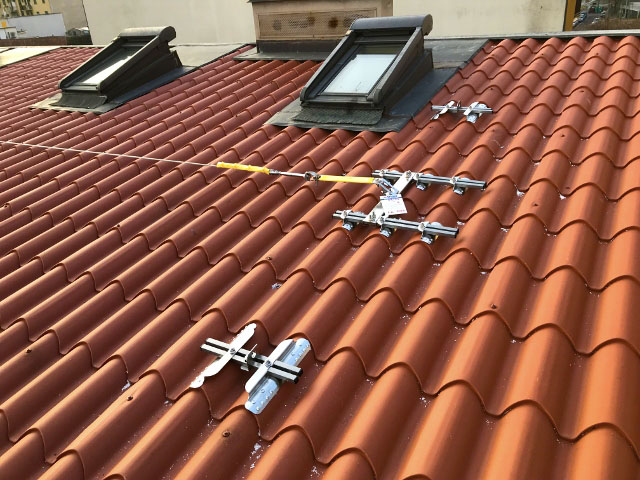
A lifeline consists of a cable or rigid rail—horizontal, inclined, or vertical—along which a connecting device, such as a carabiner or shuttle, moves, linked to the worker’s harness. Lifelines do not necessarily have to be straight; they can be curved to follow the shape of the surface on which they are installed.
For a safety lifeline installation, in addition to a trained and certified operator, you need a stainless steel or galvanized steel cable for flexible lifelines, or an aluminum or steel profile for rigid ones.
The installer, equipped with all the required PPE, attaches the anchors to the section where the lifeline must be installed and threads the cable through the dedicated fastening points previously secured. Lifelines can be installed wherever work safety must be ensured—on roofs, suspended ceilings, coverings, and more. DIY installation is never recommended: a lifeline must always be installed according to a proper design and in compliance with European safety regulations.
Lifelines are subject to mandatory installation under Legislative Decree 81, which requires implementing safety measures to protect operators working at height and refers to the technical standards UNI 11560, UNI 11578, and UNI 11158. It is also reinforced by regional rules in Tuscany, Emilia-Romagna, Veneto, Piedmont, Lombardy, Liguria, Umbria, Sicily, Marche and Sardinia. Every system must comply with EN 795, hold valid certifications, and be inspected periodically to remain legally usable.
Alongside EN 795, the new harmonised standard EN 17235 has been published for permanently installed anchor devices used in construction works. EN 17235 has entered a coexistence period that will run until August 2027. A key difference introduced by EN 17235 is the requirement of a Declaration of Performance (DOP), which is not required under the current EN 795 framework. The DOP will therefore become mandatory only when products are actually certified under EN 17235: until then, the DOP is not necessary and current EN 795 certifications remain fully valid.
Need a lifeline on your site?
REQUEST YOUR FREE QUOTE
The documents required for a lifeline system to be compliant may vary depending on regional laws, but they can generally be grouped into three main categories:
Technical documentation of the roof, which must include at least:
Only companies that can guarantee compliance with the standards and regulations governing lifeline systems are authorized to install a safety lifeline. Even though there are no laws defining a specific professional figure dedicated to installation, in practice, it is clear that the work must be carried out by a company operating in the sector.
Spider Linee Vita develops its systems using cutting-edge techniques for solving technical challenges and assessing customer needs. We have constantly worked to improve our Quality, Workplace Health and Safety, and Environmental Protection standards. For this reason, we have implemented an Integrated Management System (IMS).
Innovation is applied both to mass-produced items and to customized solutions, all protected by national and international patents. Spider is able to design 99% of the products in its catalogue, thanks to a dedicated testing area of over 400 m².
Here are just a few of our strengths:
As mentioned earlier, there is no specific law that defines who may or may not install a lifeline system. For an installer, the distinguishing risk of their profession is working at height.
The relevant regulations are Article 117 of Legislative Decree 81/08, which defines what constitutes work at height (that is, any work activity exposing the worker to a risk of falling from a height of more than two meters), and Article 115, which specifies which protective systems compliant with technical standards (PPE) must be used by the worker after a thorough risk assessment and based on the specific characteristics of the operations to be carried out. These systems may include:
Finally, according to Legislative Decree 81/08, under Title IV, Chapter II, Annex XXI, installers of lifelines and fall-protection systems in general are required to attend a specific training course for working at height, lasting 8 hours and to be renewed every 4 years (the refresher course is reduced to 4 hours).
Spider lifelines are engineered for two purposes: fall restraint keeps the worker away from the edge, while fall arrest stops a fall in progress through energy-absorbing components. The right configuration depends on roof pitch, the number of simultaneous users foreseen by the design, and load transfer to the structure.
We deliver tailored systems for flat, metal-sheet, tiled, shingled, green and structural roofs, plus overhead applications — each with dedicated brackets and fixings that preserve waterproofing and thermal performance.
For the full overview of products, design, installation and maintenance, read our complete guide to Spider lifeline systems.
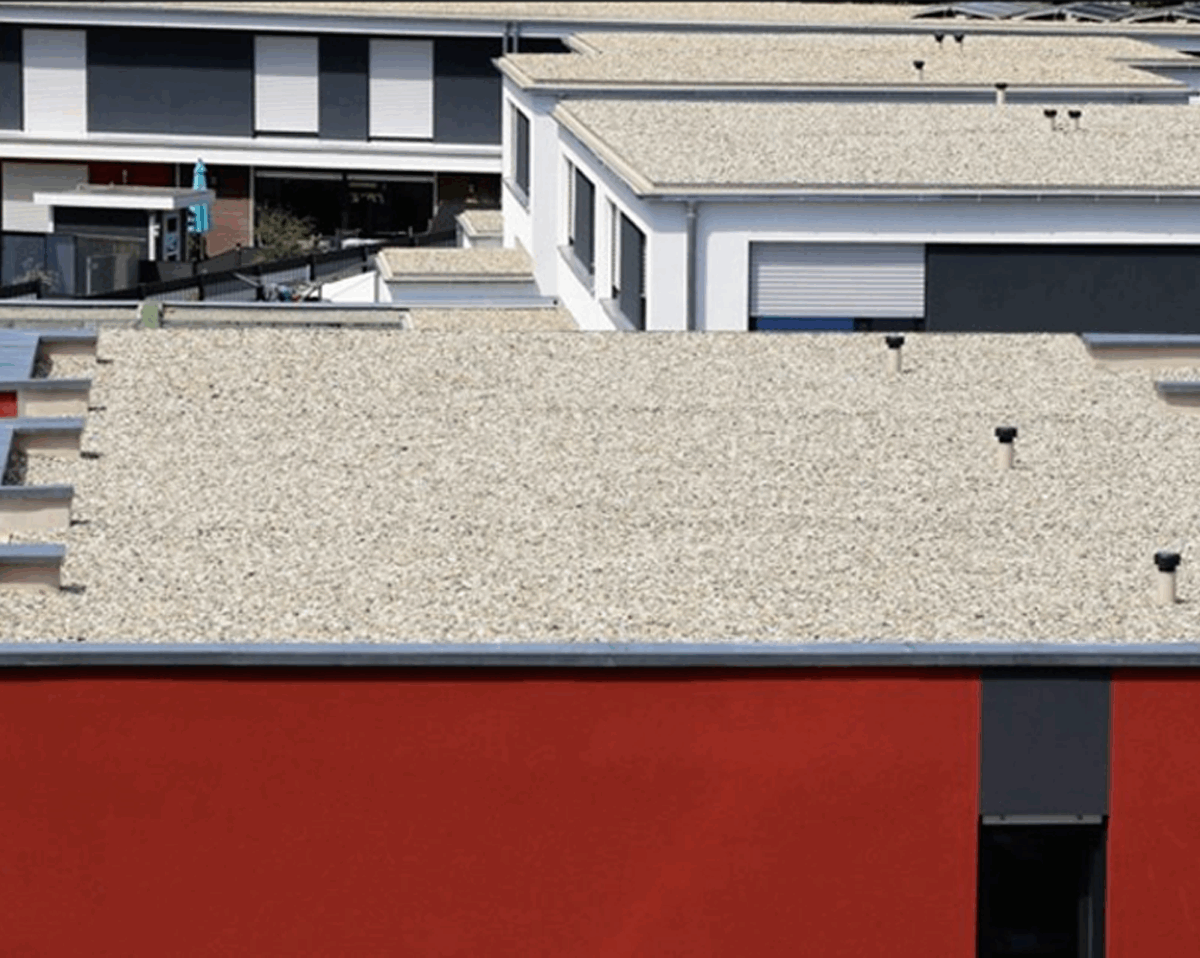
Lifelines for flat roofs and for all structures with roofs that have a low slope require a design that ensures strong waterproofing. Lifelines can be integrated into the structure or installed afterward, thanks also to ballasted devices that do not require any type of fastening.

Spider Lifelines provides customized solutions for buildings with roofs featuring intensive or extensive green roofs. In this case, installation is carried out without any fastening to the substructure.
Lifelines for sheet metal roofs
Regarding the installation of lifelines on sheet metal roofs, Spider can provide solutions for all structures with roofs made of:
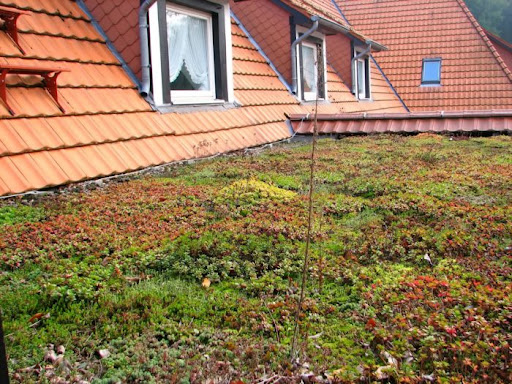
In the construction sector, it is also possible to install lifelines on buildings with roofs made of tiles, shingles, or substructures of various materials such as reinforced concrete, wood, metal frameworks, and historic structures.
Rely on professionals for lifeline installation: Spider is by your side!