Water accumulation that compromises adhesion and can damage the membrane.
How can operator safety be guaranteed during ordinary and extraordinary maintenance operations on flat roofs?
In Italy, Legislative Decree No. 81 of 2008, known as the “Consolidated Act on Occupational Health and Safety”, aims to establish uniform protection standards for workers throughout the national territory. This applies to all sectors, including maintenance operations and transit in the case of flat roofs.
Flat roofs represent a serious fall risk for operators who need to work on them or even simply walk across them. For this reason, adequate fall prevention and protection measures must be put in place in compliance with current regulations.
SPIDER can offer you bespoke design, turnkey supply, installation and maintenance of fall protection systems such as lifelines or fall arrest systems for loading bays.
When it comes to working at height, reliability and safety are essential. For this reason, choosing to rely on specialists in the field can represent a huge advantage for your company.
When it comes to working at height, the technical complexity and associated risks are high. Regulatory requirements, risk management, staff training, and the selection and maintenance of equipment are all aspects that require specific, up-to-date expertise.
By relying on specialists, you will not only have the assurance of being compliant with current regulations, but you will also benefit from the experience and technical skills these professionals bring with them. They are able to identify and mitigate risks, adequately train your staff, and ensure that equipment is always state-of-the-art and kept in optimal condition.
From a commercial standpoint, investing in safety for work at height is not just a regulatory obligation, but a strategic choice. A safe working environment can improve productivity, reduce costs linked to workplace accidents and occupational illness, and strengthen your company’s reputation.
In summary, choosing a turnkey solution provided by professionals specialised in work at height allows you to focus on your core business, while a team of professionals takes care of ensuring a safe, compliant working environment. It is an investment that pays off in terms of peace of mind, efficiency and corporate reputation.
Flat roofs represent a significant fall risk for operators. In the absence of an adequate parapet, it is mandatory to adopt fall prevention and protection measures, in compliance with current regulations. The perception of danger on these surfaces can be diminished, making a proper risk assessment before any intervention even more essential. Relying on specialists in the field is a key element in ensuring your company’s safety.
The main risks of flat roofs are:
Analysis of the roof structure: a technician must carry out a thorough assessment of the covering (materials, pitch, accessibility, state of conservation) to determine the most suitable system and verify the structure’s capacity to withstand loads in the event of a fall.
Design: a preliminary design must be drawn up to assess the actual ergonomics of the lifeline and to carry out the necessary evaluations and any corrections. Where it is not possible to draw up a design providing total fall prevention, the fall clearance calculation must also be taken into account. This parameter defines the minimum space required to ensure the operator does not hit the ground or other obstacles in the event of a fall.
Survey of insulation and waterproof membrane: to ensure the system’s compatibility with the existing covering and avoid compromising waterproofing.
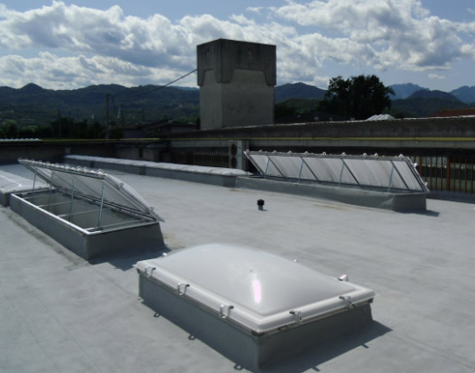
Surface inspection: to guarantee the safety of the covering, in addition to the risk of falling from the edge, the presence of any unprotected skylights, smoke vents, service ducts, or any other situations that put the operator at risk must also be identified.
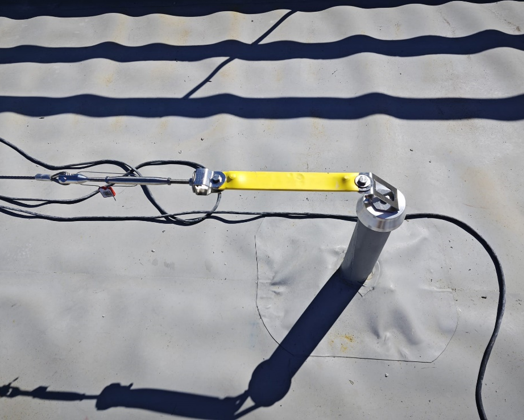
Horizontal flexible anchor lines, usually consisting of a cable stretched between two or more structural anchors, are the most common solution for flat roofs or those with moderate pitches. This type allows the operator to move along an extended path. They can be rigid or deformable, depending on the need to limit the fall force transmitted to the structure.
Installation of the safety devices should ideally take place during the roof construction phase, so that they can be properly integrated with the waterproof membrane and ensure its watertightness. Where permitted, it is always advisable to opt for non-deformable posts, which, in the event of improper use, do not require replacement of the entire structure, but only of the damaged components of the anchor system. This results in a significant reduction in maintenance costs and time.
Roofing membranes for flat roofs, also known as “flat roofs” or “terraces”, are the outermost and most essential layer for ensuring the building’s waterproofing. The choice of material depends on various factors such as cost, durability, exposure to weather conditions and the type of roof use.
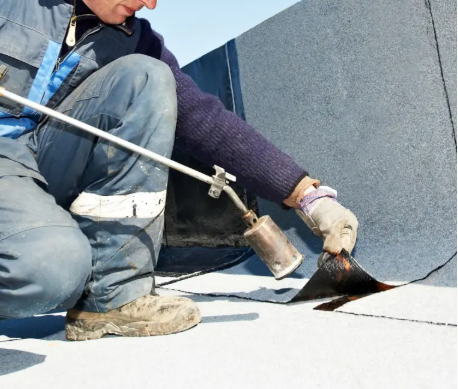
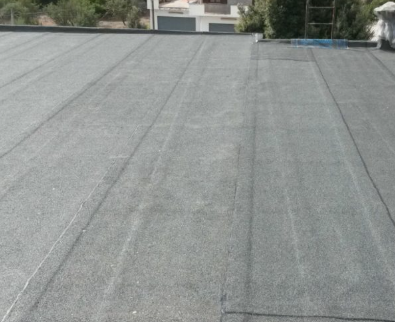
Bituminous membranes are the most widespread and traditional type, made of polymer-modified bitumen. They are applied in rolls that overlap and are hot-welded using an open flame, or in some cases with cold-applied methods. They offer good resistance to water and thermal fluctuations, with a variable lifespan, on average between 15 and 25 years.
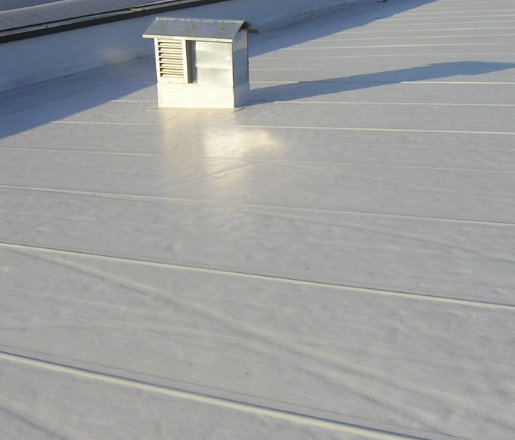
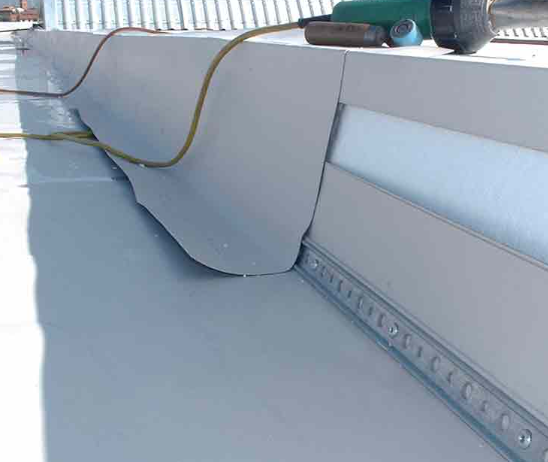
Synthetic membranes are waterproof membranes made from plastic materials. The most common types are PVC, TPO (polyolefins) and EPDM. They are sheets welded together using hot air, avoiding the use of open flames. They can be mechanically fixed, glued, or loose-laid and ballasted. They are highly resistant to ageing, UV rays, thermal fluctuations and chemical agents. They have a useful life that can exceed 30-40 years. They maintain excellent flexibility even at low temperatures and adapt to the building’s structural movements. They ensure lightness, long lifespan, lower fire risk during installation, compatibility with many substrates and the possibility of recycling. They have a higher initial cost, require specialised labour, and can be sensitive to contact with certain oils or solvents.
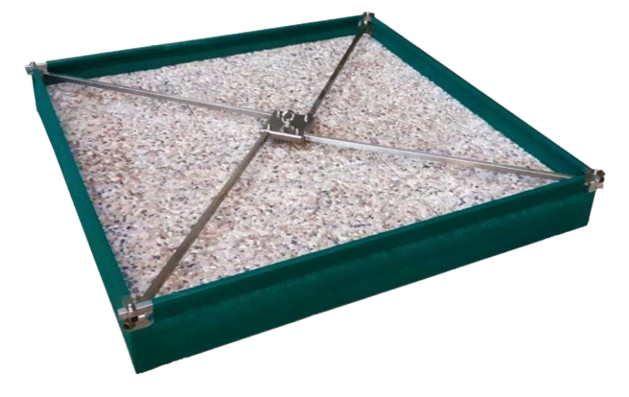
Type E lifelines are a specific and highly useful solution for roof safety, particularly where traditional fixed anchor systems cannot be installed. Often referred to as “deadweight anchors” or “ballasted anchors”, they are fall protection systems that provide a secure anchor point without the need to permanently fix them to the roof structure.
Here are their distinctive features:
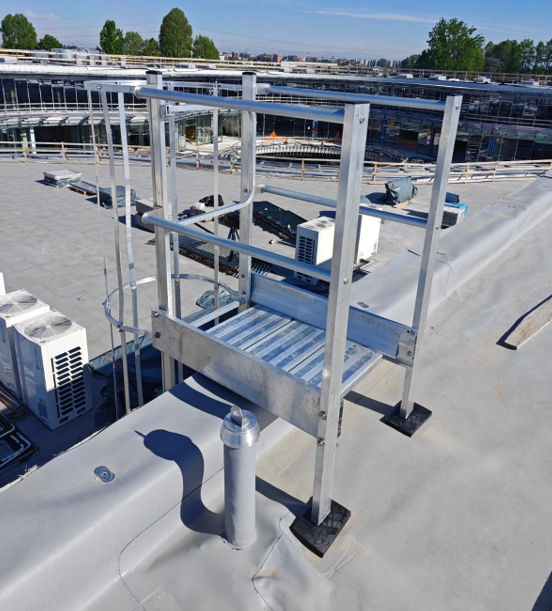
Access at height using lifelines is governed by precise regulations and safety procedures, aimed at ensuring maximum protection for workers. The correct approach is based on detailed planning and the use of suitable equipment. It is essential to plan safe access to the roof from the outset, not only for installing the system, but also for all future maintenance activities. This ensures that every intervention can be carried out in complete safety, in full compliance with current regulations.
Regulations on working at height are a crucial topic, particularly across the EU and the UK, and they comprise a set of rules designed to guarantee worker safety. These regulations can seem complex, but don’t worry — we’re here to help you understand them better!
First of all, it’s important to stress that these rules were created with a single objective in mind: your safety.
These regulations include requirements for training, safety equipment and standard operating procedures. For example, you may need to complete a specific training course or use personal protective equipment (PPE) such as safety belts or harnesses.
But how do these regulations apply in practice? And how can they affect your day-to-day work? This is where our team of experts comes in. We’re here to help you navigate the maze of laws and rules, to make sure you can work safely and in compliance.
If you’d like to find out more, or need assistance understanding how these regulations apply to your specific sector or situation, don’t hesitate to contact us. We can offer you tailored advice, answer your questions and guide you through the process step by step.
Regulations for work at height – Europe
It is important to note that these EU Directives are implemented in Member States through national legislation.
Remember, specific regulations may vary from one country to another within the EU, so it is important to consult the local laws of your country